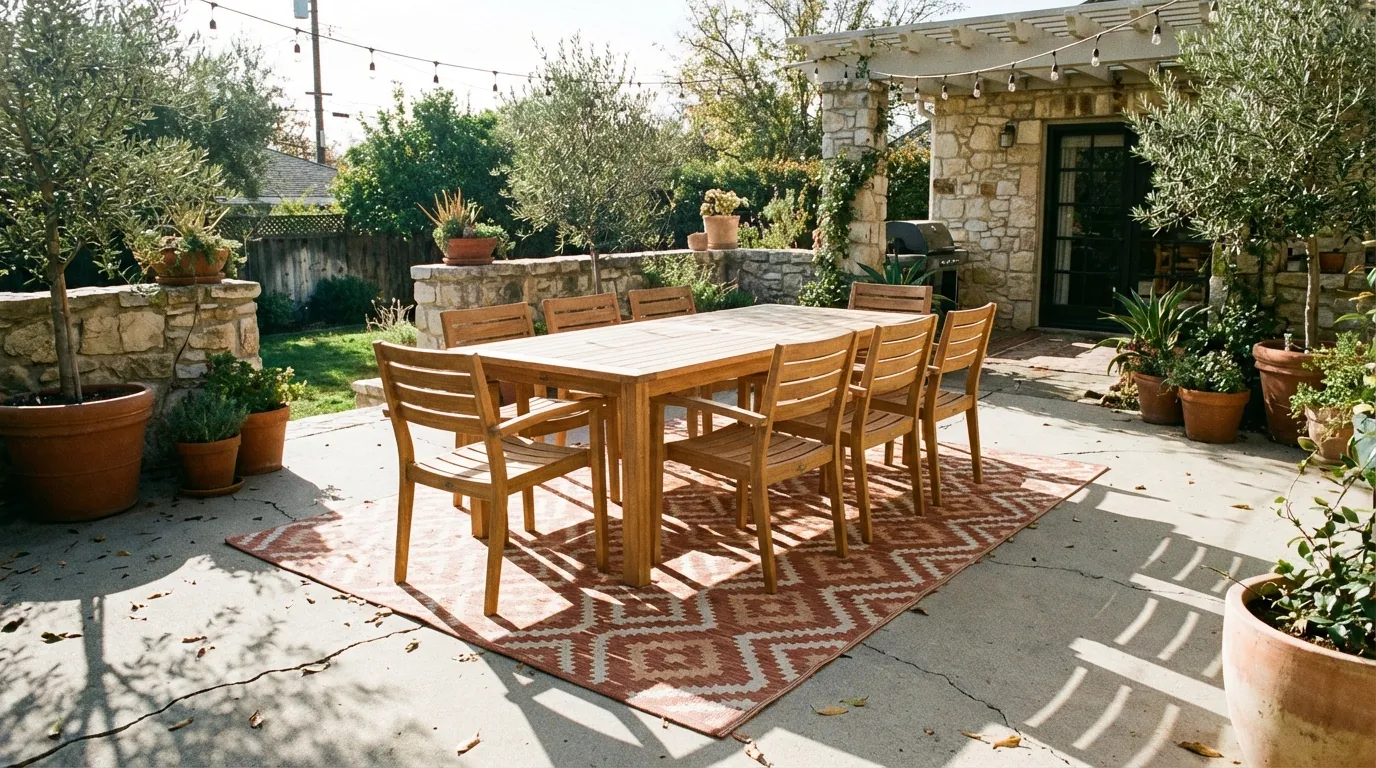
Most patio rugs don’t fail because of bad design. They fail because the buyer picked the wrong material for their specific setup — or bought the wrong size and never loved how it looked. This guide cuts through the noise. You’ll know exactly which material holds up in your conditions, how to size it correctly for your furniture, and what to skip entirely.
What Makes an Outdoor Rug Different from an Indoor Rug
An outdoor rug isn’t just a regular rug moved outside. The two are built differently from the ground up.
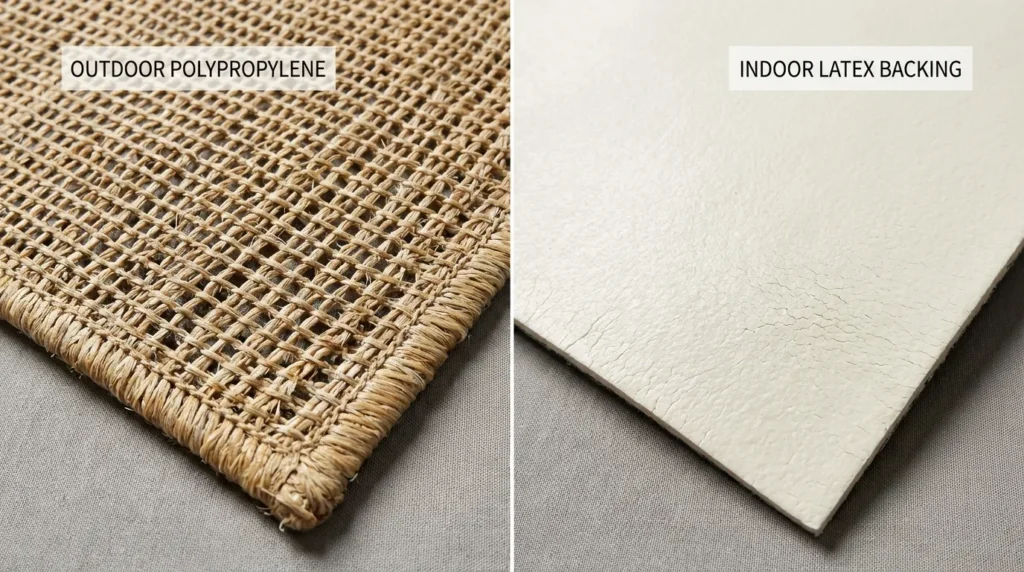
Indoor rugs use natural fibers, latex backings, and dyes that aren’t built for UV exposure or moisture. Put one outside for a season and you’ll get fading, mold underneath, and a backing that starts to deteriorate.
Outdoor rugs are built with synthetic fibers that repel water, resist UV breakdown, and don’t trap moisture at the base. The good ones use solution-dyed fibers — meaning the color is baked into the fiber itself, not applied on top. That’s why they don’t fade after one summer.
The backing matters too. Most outdoor rugs use a latex-free polypropylene or rubber-free open-weave base that lets water drain through rather than pool underneath. If your broader patio setup is still taking shape, the small patio design inspiration ideas guide is worth reading before you finalize any rug purchase — the layout affects sizing significantly.
Best Materials for Outdoor Patio Rugs
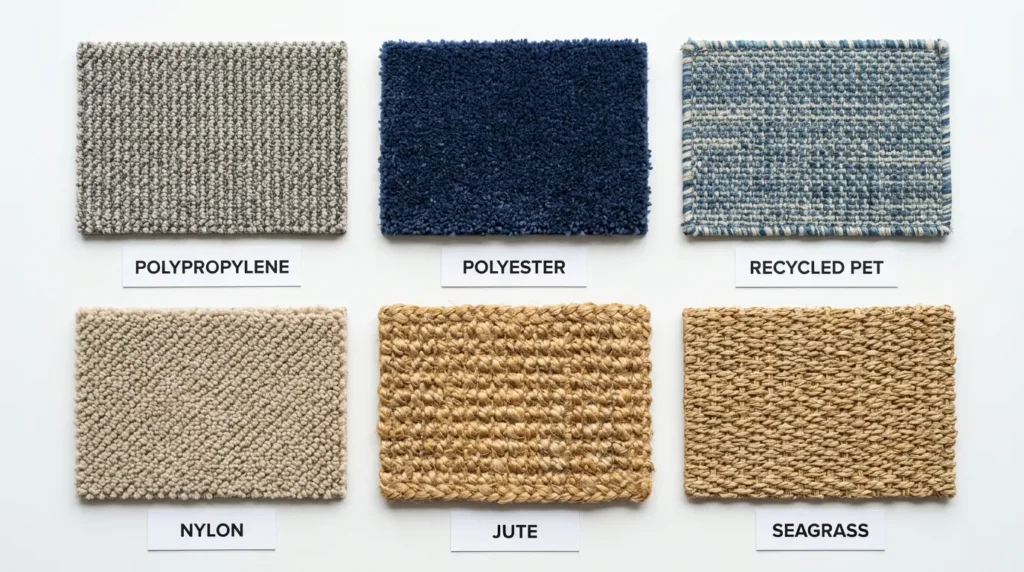
Polypropylene — Best Overall
Polypropylene (also called olefin) is the most widely used outdoor rug material — and for good reason. It’s hydrophobic, meaning water can’t absorb into the fiber. It dries fast, resists mold, and holds color well when solution-dyed.
It’s also one of the most affordable synthetic options. A quality 8×10 polypropylene rug runs $60–$130 depending on pattern complexity.
The one downside: lower-grade polypropylene can feel stiff underfoot. Look for flatweave or low-pile construction if you want something softer.
Best for: Fully exposed patios, pool decks, high-humidity climates, high-traffic areas.
For most exposed patios, a polypropylene outdoor rug in the 8×10 size is the safest starting point.
Polyester — Best for Softness and Color
Polyester outdoor rugs feel noticeably softer than polypropylene. They also hold color well and come in a wider range of patterns. If aesthetics are your priority, polyester delivers more.
The trade-off is moisture performance. Polyester absorbs slightly more water than polypropylene and takes longer to dry. In humid climates or areas with frequent rain, mold can develop underneath if the rug sits on a non-draining surface for too long.
Best for: Covered patios, dry climates, partially shaded areas where moisture isn’t a major issue. If you’re building out a full covered outdoor seating area, polyester is a legitimate upgrade over polypropylene in that controlled environment.
Recycled PET — Best Eco Option
Recycled PET rugs are made from post-consumer plastic bottles. They perform similarly to standard polyester — good color retention, decent softness — but with a lower environmental footprint. Several major brands now use certified recycled content.
Performance-wise, they’re a solid middle ground. Not as moisture-resistant as polypropylene, but better than natural fibers.
Best for: Covered or semi-exposed patios where eco-sourcing matters to the buyer.
Nylon — Best for Covered High-Traffic Patios
Nylon is the most durable synthetic option in terms of wear resistance. It handles heavy foot traffic without matting down, and it cleans well. The problem is moisture — nylon absorbs water and dries slowly. It’s not built for full weather exposure.
Best for: Covered porches, screened lanais, high-traffic entries where it won’t get rained on.
Natural Fibers — When They Work (and When They Don’t)
Jute, sisal, and seagrass have a look people love. They’re also genuinely risky outdoors.
Natural fibers absorb water. When they stay wet, they rot. A jute rug left on an exposed patio through one wet season can develop mold within weeks. Even on a covered patio with occasional moisture, they require consistent drying and care.
The one exception: seagrass handles humidity better than jute or sisal, and some seagrass rugs are treated for light outdoor use on covered patios.
Avoid entirely: Any exposed patio in a humid or rainy climate. Use with caution: Covered, dry patios with zero rain exposure — and only if you’re committed to drying it after any moisture contact.
Quick Material Comparison
| Material | Best For | Avoid If |
|---|---|---|
| Polypropylene | Exposed patios, rain, sun | You want very soft underfoot feel |
| Polyester | Covered patios, dry climates | High humidity or full sun |
| Recycled PET | Eco-conscious buyers, covered patios | Constant rain or pooling water |
| Nylon | Covered high-traffic areas | Any outdoor rain exposure |
| Jute / Sisal | Dry, fully covered only | Any real moisture or rain |
| Seagrass | Covered, low-humidity only | Wet climates |
Exposed vs. Covered Patio — It Changes Everything
This is the most ignored variable in outdoor rug buying.
Fully exposed patio: Rain hits it directly. Sun exposure is maximum. The only materials worth using here are solution-dyed polypropylene (first choice) or recycled PET. Low-pile or flatweave construction drains fastest and dries quickest. Avoid anything with a high pile — water traps in the fibers and takes too long to dry.
Covered patio or screened porch: You have far more options. Polyester, nylon, even lightly treated natural fibers can work here. Pile height can go slightly higher. That said, covered doesn’t mean zero moisture — humidity, condensation, and blowing rain still happen. Polypropylene is still the safest default. Looking to do more with your covered space? These covered outdoor seating ideas pair well with rug planning for a fully cohesive setup.
Partial shade or overhang: Treat it like an exposed patio. If rain can reach it from any angle, pick accordingly.
How to Choose the Right Size
Sizing is where most people make a visible mistake. A rug that’s too small makes furniture look like it’s floating. One that’s too large crowds the space and covers drainage.
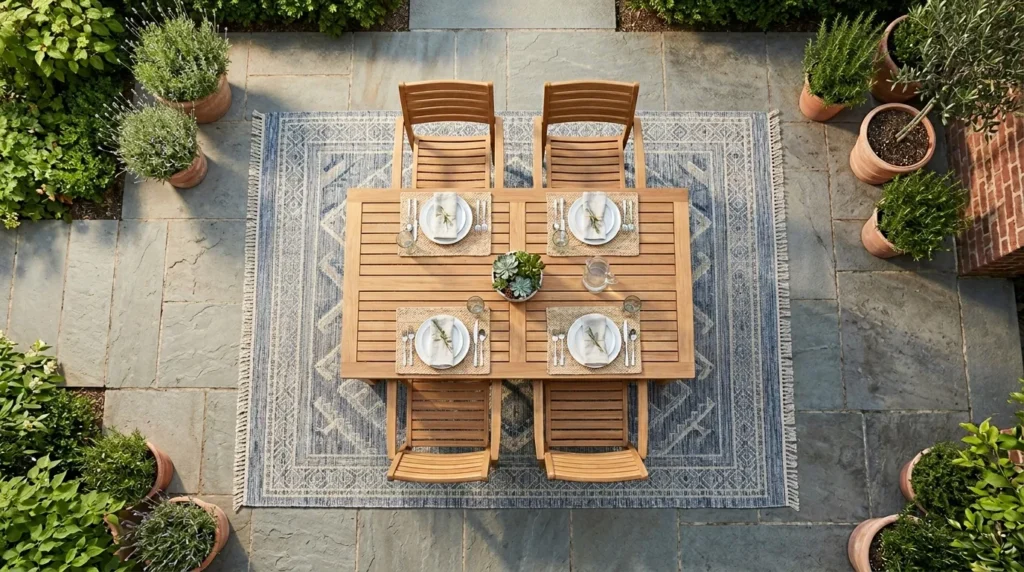
The core rule: All front legs of your furniture should sit on the rug. Ideally, all four legs do — but at minimum, the front two. This visually anchors the furniture to the rug and makes the space look intentional.
Leave 2–3 feet of patio surface visible on all sides of the rug when possible. This frames the rug and prevents the space from looking covered wall-to-wall.
Standard Size Guide by Furniture Setup
| Setup | Recommended Rug Size |
|---|---|
| Small bistro table (2 chairs) | 4×6 or 5×7 |
| 4-chair dining set | 8×10 (minimum) |
| 6-chair dining table | 9×12 |
| Small seating group (2 chairs + side table) | 5×7 or 6×9 |
| Large sectional sofa setup | 9×12 or 10×14 |
| Narrow patio or deck border | 2×8 or 3×10 runner |
| Round table (4 seats) | 8′ round rug |
Tip on dining rugs: Pull chairs out to sitting position before finalizing a size. The chair legs should still sit on the rug when someone is seated — not just when the chair is pushed in. This typically adds 12–18 inches to each side.
If you’re working with a deck rather than a concrete patio, check the deck cost estimator tool to factor rug sizing into your overall deck planning budget. For tiled patios, the tile quantity estimator can help confirm your usable surface area before you buy.
Shape Guide — Rectangular, Round, or Runner?
Rectangular is the default for most patios. It works with nearly any furniture layout and is easiest to size correctly.
Round rugs work best under round or square tables. They also add visual softness to a corner seating area. Don’t use a round rug under a rectangular table — the shape conflict looks awkward.
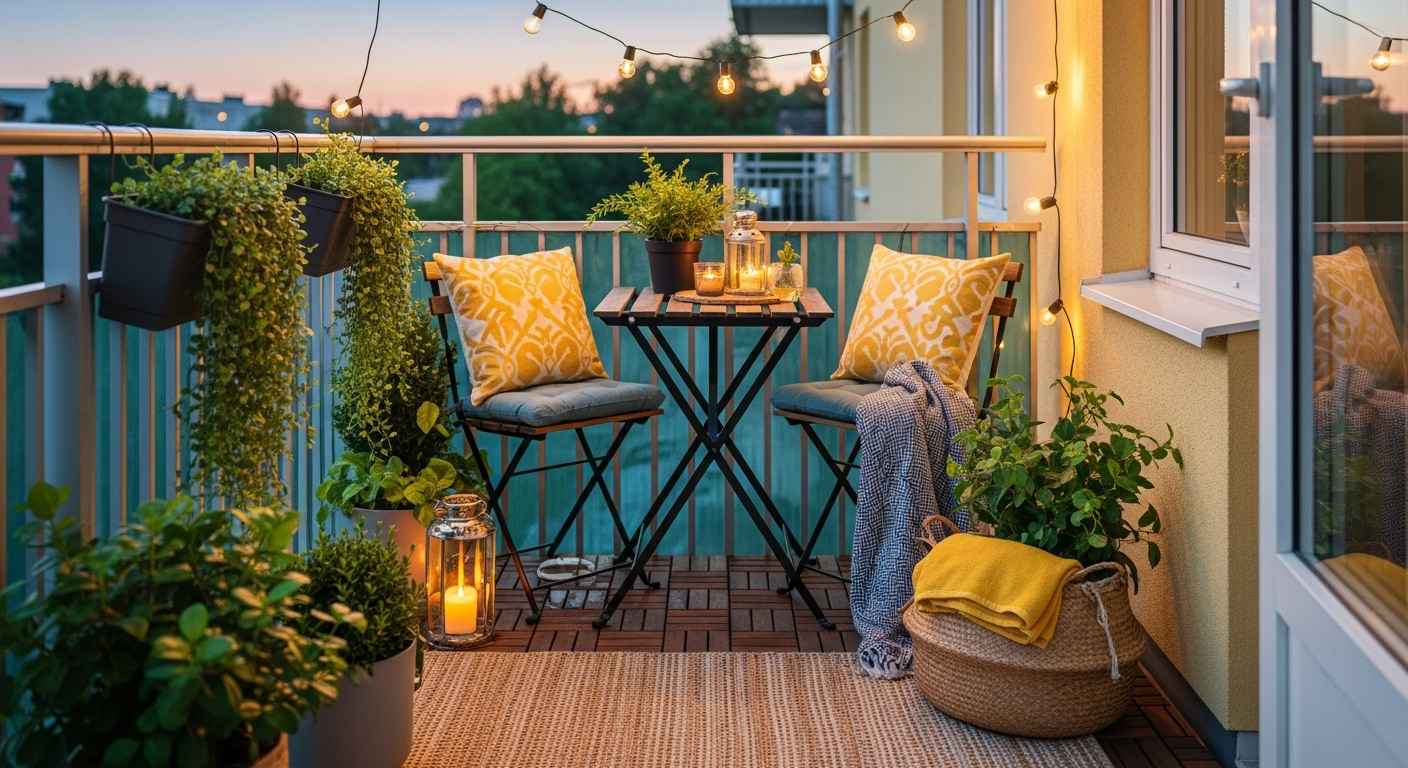
Runners work on narrow balconies, along pool edges, or to define a walking path between spaces. If you’re working with a compact outdoor space, these cozy balcony makeover ideas show how runners and small rugs define zones without overwhelming a limited footprint.
Rug Construction Types That Affect Performance
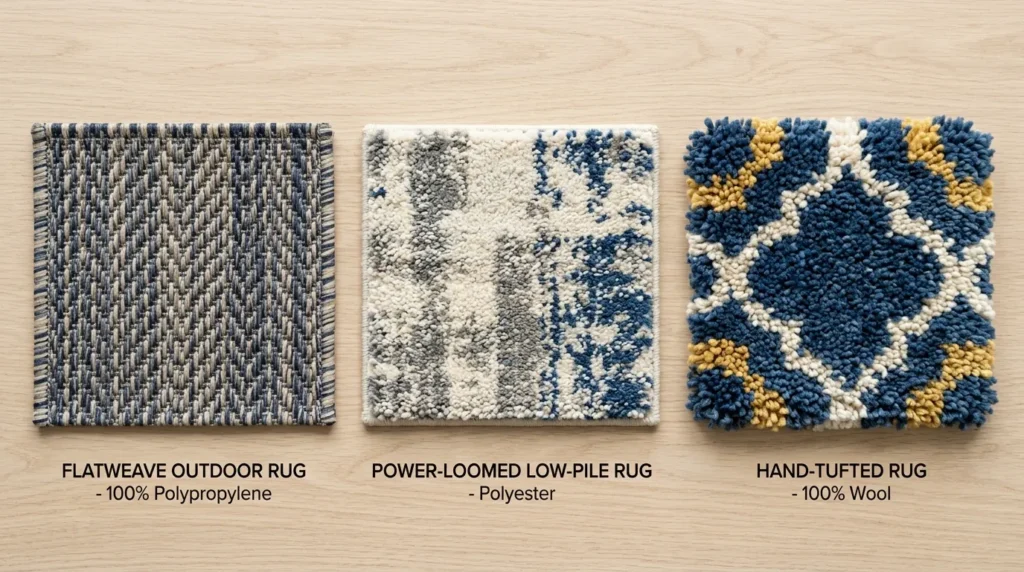
Flatweave
Flat, no pile. Water drains immediately and drying time is minimal — often under an hour in sun. Easiest to clean and lightest to move. Some feel rough underfoot; others have enough texture to be comfortable. Best all-around construction for exposed patios.
Power-Loomed
Machine-made with a low to medium pile. Consistent quality, huge range of patterns, and generally affordable. Power-loomed polypropylene is the most common outdoor rug type sold today. Performance depends almost entirely on the fiber quality — not the construction method.
Hand-Tufted
Hand-tufted rugs are softer and often more detailed in pattern. The construction is more delicate. Moisture can reach the backing more easily, and they’re harder to clean thoroughly. Reserve these for covered, dry patios where you prioritize aesthetics over durability.
Do You Need a Rug Pad Outdoors?
Yes — for most situations.
Outdoor rug pads serve three purposes: they prevent slipping on smooth patio surfaces (concrete, tile, composite decking), they elevate the rug slightly off the surface to allow airflow and prevent mold, and they extend the rug’s life by reducing wear on the backing.
On textured concrete or pavers, a rug pad is less critical for grip but still helps with mold prevention. On smooth tile or composite decking, it’s essential for safety.
Look for a PVC or rubber-free open-weave pad designed for outdoor use. Standard indoor rug pads break down from moisture and heat.
Use an open-weave outdoor rug pad designed for exterior use — standard indoor pads break down from heat and moisture.
How to Clean and Maintain a Patio Rug
Weekly (1 Minute)
Shake or sweep off debris. Leaves and dirt left sitting trap moisture and accelerate mold growth underneath.
Monthly Deep Clean (10 Minutes)
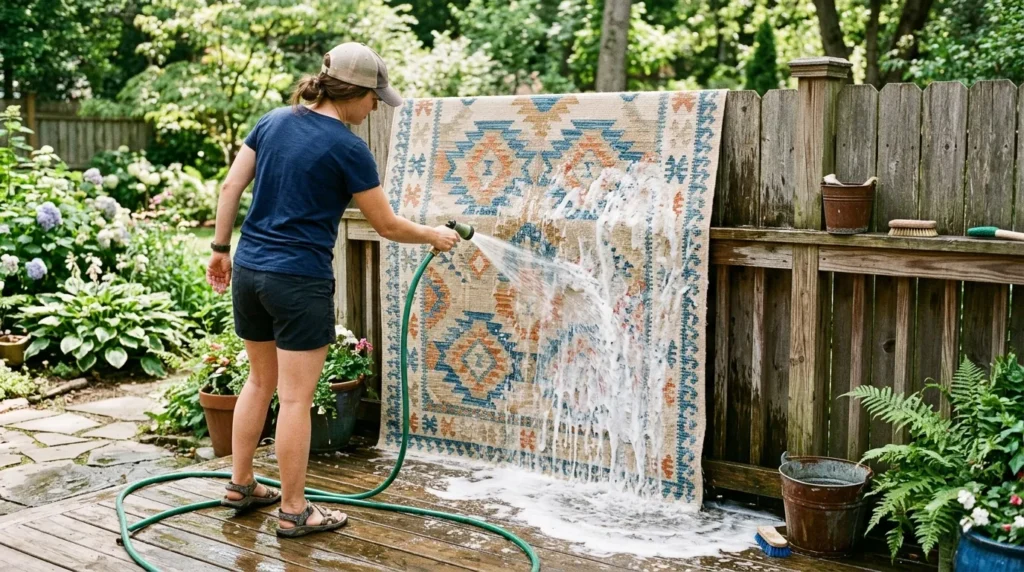
Flip the rug and sweep the underside. Flip back. Hose it down with clean water. Apply a mild dish soap solution with a soft brush if needed. Rinse thoroughly. Stand it on its side or drape it over a railing to dry — never leave it flat and wet on the patio surface. Allow 24–48 hours to fully air dry before laying it back down.
Avoid pressure washers — they can damage fibers and loosen the backing.
Seasonal Storage
Before temperatures drop consistently below freezing, clean the rug thoroughly, let it fully dry, roll it (don’t fold — folding creases the backing), and store it in a dry location. A garage or basement works. Leaving a rug out through freeze-thaw cycles damages the backing and shortens its life significantly. For a broader seasonal outdoor maintenance schedule, the seasonal lawn care calendar covers the full outdoor prep routine — rug storage fits neatly into the fall wind-down checklist.
Outdoor Rug Price Ranges — What to Expect
Budget ($15–$50): Small sizes, 4×6 and under. Thin flatweave construction. Fine for balconies or low-use covered patios. Lifespan: 1–2 seasons with regular care.
Mid-range ($50–$170): The most common range for 8×10 and 5×8 rugs. This is where quality polypropylene construction starts showing up. Expect 3–5 years with seasonal storage. Most buyers are best served here.
Premium ($170–$400+): Thicker construction, more detailed patterns, better color retention. Brands like Loloi and Jaipur Living sit in this tier. Worth it if the rug is a design centerpiece. Lifespan: 5–7+ years with proper care.
Dark-colored rugs at any price point can absorb more heat in direct summer sun — relevant if the rug is in a high-traffic barefoot area like a pool deck. If a pool deck is part of your layout, the swimming pool landscaping ideas guide covers surface and accessory choices that pair well with outdoor rug selection. For buyers working within a tighter overall outdoor budget, the affordable backyard makeover ideas under $1,000 guide is worth bookmarking alongside this one.
5 Common Mistakes to Avoid
- Buying too small. The most common mistake. Go up one size when in doubt — it almost always looks better.
- Using a natural fiber rug on an exposed patio. Jute and sisal look great in photos and rot outdoors. It’s not worth it.
- Skipping a rug pad on smooth surfaces. A slipping rug on a wet tile patio is a fall hazard.
- Leaving the rug out through winter. Freeze-thaw cycles destroy backings. Roll and store it.
- Ignoring exposure level. A covered porch and a south-facing open patio are completely different environments. Material choice should reflect that.
Frequently Asked Questions
Can outdoor rugs get wet? Synthetic outdoor rugs — polypropylene, polyester, recycled PET — are built to get wet. They won’t be harmed by rain. The key is airflow underneath so they dry completely. Natural fiber rugs should not get wet.
How long do outdoor rugs last? Polypropylene and polyester rugs last 3–5 years in exposed conditions with seasonal storage. On covered patios with less UV and moisture exposure, 5–7 years is realistic. Budget-tier rugs without UV stabilization typically fade and break down within 1–2 seasons.
Can I leave my rug out all year? In mild climates with no hard frost — yes, if the rug is fully synthetic and you clean it regularly. In climates with freezing winters, roll it up and store it. The rug itself can handle cold, but freeze-thaw cycles damage the backing.
Will a dark rug get hot in the sun? Yes. Dark-colored rugs absorb more heat from direct sunlight. On a pool deck or any area where people walk barefoot, a light or mid-tone rug is more practical in summer.
What rug size works for most patios? An 8×10 is the most versatile size for standard 4-chair dining sets and medium seating groups. If you’re unsure, measure your furniture group, add 18 inches on all sides, and match the nearest standard size.
Final Thoughts
An outdoor rug that actually lasts isn’t hard to find — but the right choice depends on three things: your exposure level, your furniture size, and your climate. Nail those three variables and the material choice follows logically. Polypropylene handles the most conditions with the least maintenance. Size up when you’re uncertain. Store the rug before winter. That’s the whole playbook.
Ready to take the next step on your outdoor space? The low-maintenance backyard design ideas for 2026 guide covers surface choices, furniture layout, and greenery that work alongside a well-chosen outdoor rug.


Leave a Reply