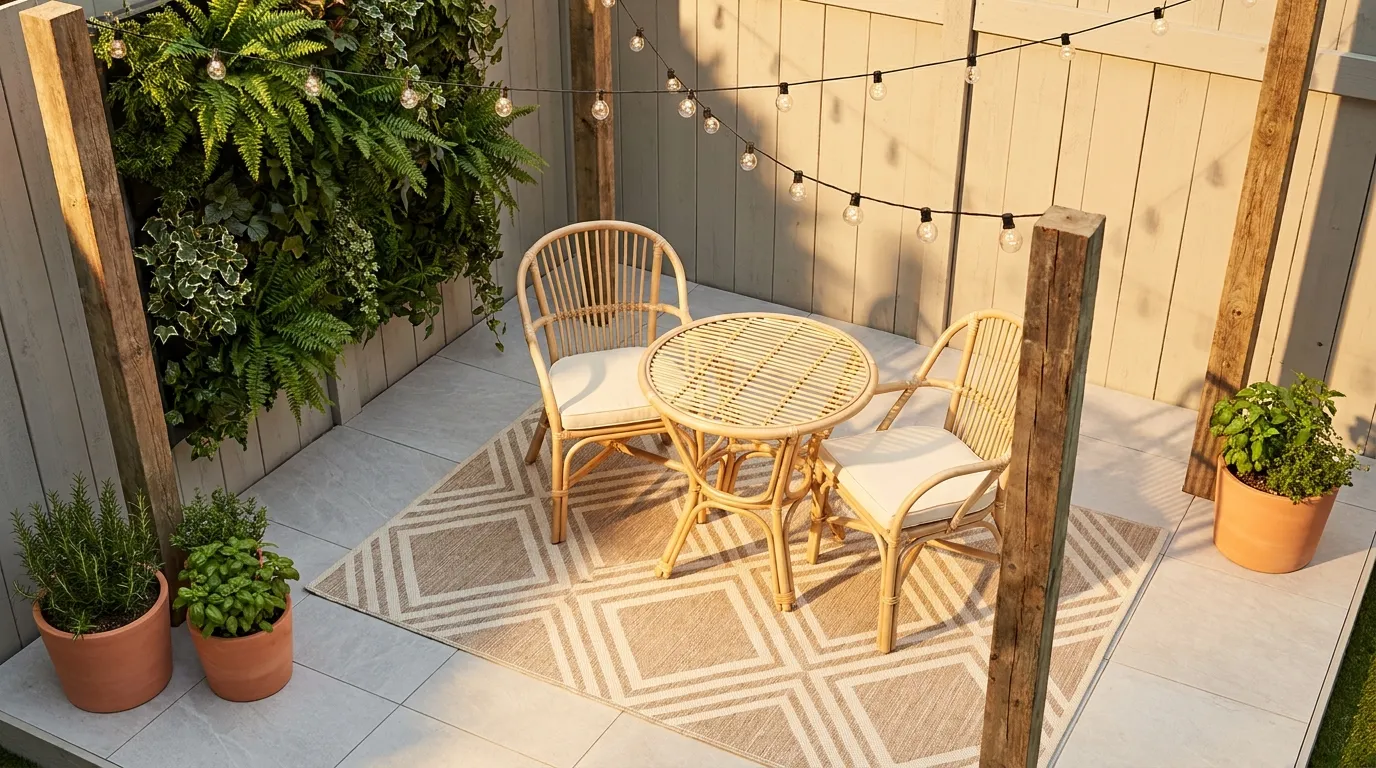
You step outside, look at your tiny concrete slab, and wonder what to do with it. It feels cramped. It feels wasted. But the problem almost never comes down to size — it comes down to decisions. Wrong furniture scale, no defined zones, no vertical use. Fix those three things and a 60-square-foot patio can feel like an outdoor room.
This guide covers 25 actionable small patio ideas organized by category — from ground-level foundation choices all the way to the lighting details that change everything at 7 PM. Real measurements are included. No filler.
Start With the Ground — It Sets Everything Else
Before buying a single piece of furniture, decide what goes underfoot. The floor is what your eye reads first, and it controls how large or small the entire space feels.
1. Use a Light-Colored Outdoor Rug to Define Zones
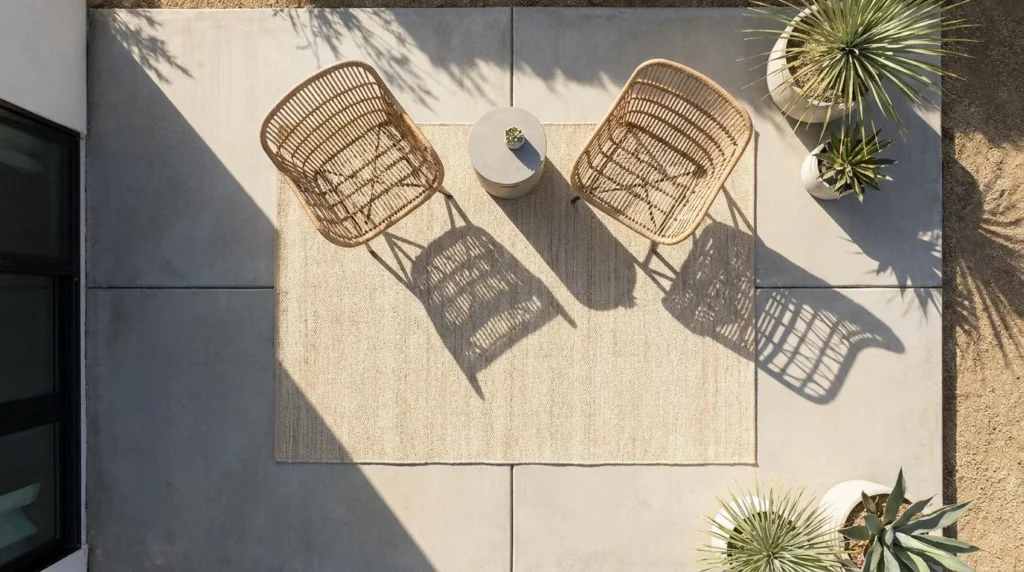
A light-colored, weather-resistant outdoor rug is the single fastest upgrade for a small patio. It defines the seating zone visually, draws the eye outward rather than downward, and gives your furniture somewhere to “belong.” Without a rug, chairs and a table on a plain concrete slab look like they were dropped there by accident.
Choose a rug that fits under all four legs of your seating furniture, with at least 12 inches of rug extending beyond each chair. For a standard bistro setup, a 5×8 rug works well. For an L-shaped sectional on a 10×10 patio, go no smaller than 8×10.
For choosing the right outdoor rug size and material for your climate, the outdoor rugs for patios guide breaks it down clearly.
2. Choose Patio Flooring That Visually Expands the Space
If you’re starting from scratch or replacing worn concrete, flooring choice matters. Light-colored porcelain pavers and stamped concrete both reflect more light than dark surfaces, which makes the patio appear larger. Laying tiles or pavers on a diagonal — at 45 degrees instead of grid-straight — tricks the eye into seeing more width.
Basic patio installation for 100 square feet runs $800 to $4,000 depending on material. Premium porcelain or natural stone pushes past $10,000. Before you commit to materials and quantity, use the patio cost estimator to build a realistic budget. You can also calculate exact material quantities with the tile quantity estimator before ordering.
Get Your Layout Right Before Buying Anything
Poor layout makes premium furniture feel cluttered. A smart layout makes budget furniture feel designed. Measure first, buy second.
3. Follow the Small Patio Clearance Rules
Three measurements govern how comfortable any small patio feels:
- Walkway clearance: 30 inches minimum from door to seating zone. Never block a sliding door.
- Coffee table gap: 14 to 18 inches between your seat cushion and the table edge. Enough to reach your drink, enough to stretch your legs.
- Dining clearance: 24 to 36 inches from the table edge to the nearest wall or fence. You need room to pull a chair out without standing sideways.
Mark these measurements on your actual patio with painter’s tape before ordering any furniture.
4. Layout Plans by Patio Size
8×8 ft patio (64 sq ft): One bistro set (two chairs, one small round table) plus a vertical planter in one corner. This leaves a 30-inch walkway clear. Nothing else fits without overcrowding.
10×10 ft patio (100 sq ft): A compact two-seat sectional or loveseat with a coffee table plus two stackable side chairs. You can add a corner shelf for plants without blocking flow. This is where most homeowners have the most design flexibility.
12×12 ft patio (144 sq ft): An L-shaped modular sectional with a central coffee table, two additional chairs angled at 15 to 30 degrees, and space for a side console or bar cart. Angling the furniture slightly breaks the boxy feeling and improves traffic flow.
For broader budget planning across your outdoor space, the affordable backyard makeover ideas guide shows how to stay under $1,000 for major upgrades.
Space-Saving Furniture Ideas That Actually Work
Every piece on a small patio needs to earn its place. Multi-function is not a buzzword here — it’s a requirement.
5. Bistro Sets for Solo or Duo Use
A two-seat bistro set — round table, two chairs — is the gold standard for patios under 80 square feet. Look for folding or stackable versions. A folding bistro set can be collapsed against the wall when you’re not using it, reclaiming 8 to 12 square feet instantly.
6. Modular Sectionals With Storage Ottomans
On 10×10 and 12×12 patios, modular sectionals are worth the investment. The ottoman does triple duty: extra seat, footrest, or tray table. A well-chosen modular set compresses three furniture functions into one footprint. Look for sets with weatherproof synthetic rattan or powder-coated aluminum frames — both handle UV and rain without cracking.
The outdoor furniture trends guide covers what’s durable and worth buying versus what looks good in photos but fails in six months.
7. Stackable Chairs and Foldable Tables for Hosting
If you host occasionally but not daily, stackable chairs solve the problem completely. Keep two out. Stack four more in a corner or garage. A foldable table can be pulled out for a weekend dinner and stored flat the rest of the time. This approach keeps your everyday patio open and breathable while still being host-ready in 10 minutes.
8. Bench Seating Along the Perimeter
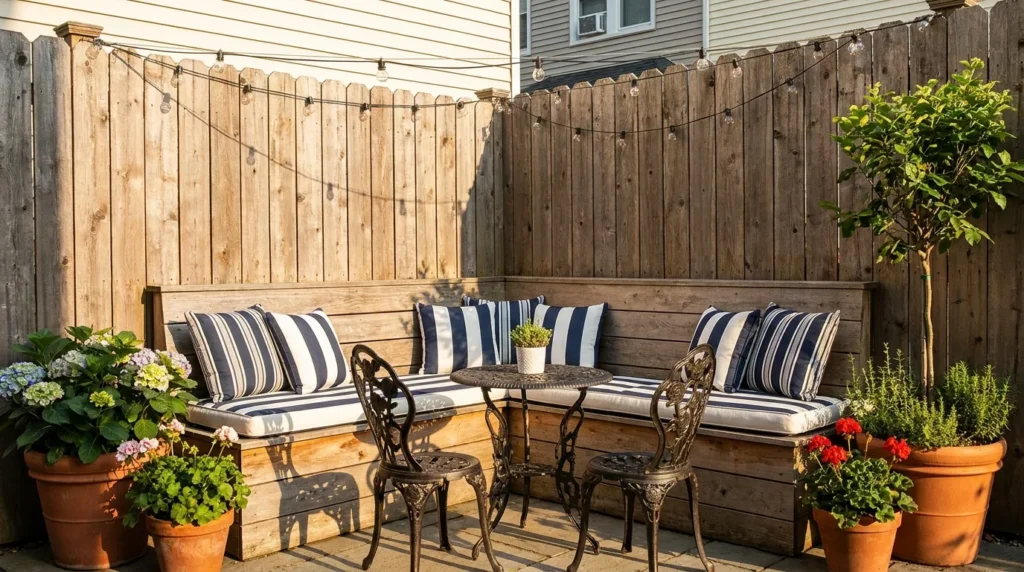
A built-in or freestanding bench along one fence or wall maximizes seating per square foot better than individual chairs. A 6-foot bench seats three people but occupies less floor area than three separate chairs. Add storage underneath — benches with lift-top compartments hold cushions, throws, and gardening tools without adding visual clutter.
9. Hanging Chairs and Hammock Chairs
A hanging egg chair or hammock chair mounted to a ceiling beam, pergola, or freestanding stand provides seating without occupying floor space below. They’re particularly effective in corner spots where a traditional chair would feel awkward. Most hammock chairs require a load-rated anchor point of at least 250 lbs — verify the mount before hanging.
If you want to build a storage ottoman yourself and save money, the DIY storage ottoman build guide walks through the full process.
Go Vertical — Wall and Overhead Ideas
The most underused dimension on any small patio is the vertical one. Walls, fences, and overhead structures can hold plants, lights, shelves, and shade — all without touching the floor.
10. Vertical Garden Walls
A vertical garden wall is a trellis or panel system mounted to a fence or wall, fitted with modular planters or pockets. A 4×6 ft vertical garden can hold 20 to 30 plants and takes zero floor space. Use drought-tolerant species like sedums, ferns, trailing pothos, or herbs for a wall that’s both decorative and functional.
For a complete build walkthrough, the vertical garden walls for patios DIY guide covers materials, mounting methods, and irrigation options.
11. Wall-Mounted Shelves and Planters
Floating shelves and wall-mounted planters on an exterior wall give you a surface for succulents, lanterns, or small pots without floor contact. Cedar and teak hold up best outdoors. Space shelves 12 to 14 inches apart vertically for standard pot sizes.
12. Trellises With Climbing Plants
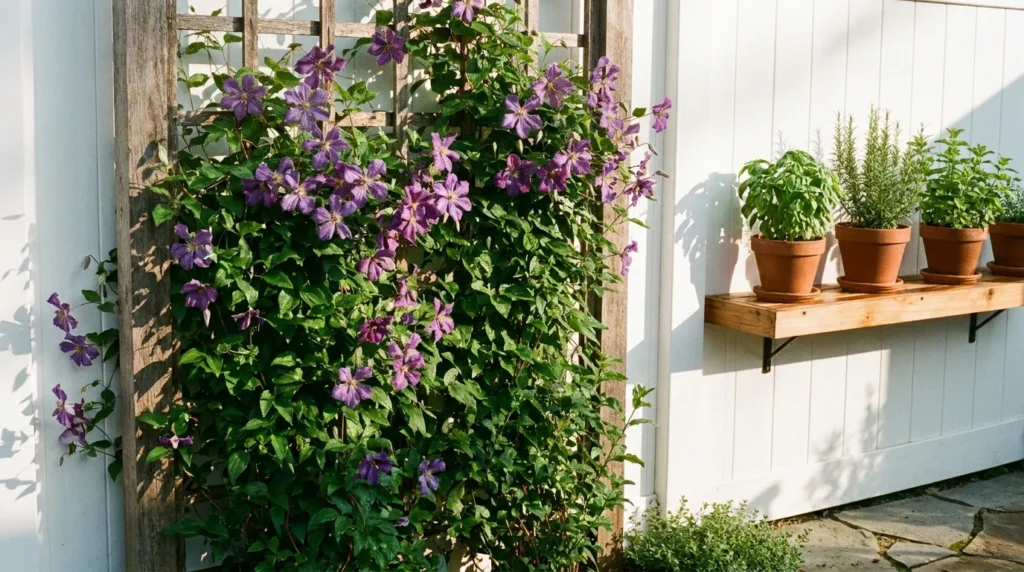
A trellis against a fence creates a living wall in one growing season. Clematis grows 8 to 12 feet in a single year. Jasmine fills in quickly and adds fragrance. Star jasmine is particularly popular for small patios because it stays dense at the base rather than going leggy. Anchor a trellis panel 2 to 3 inches away from the fence to allow airflow and prevent rot.
13. Overhead String Lights and Pendant Lanterns
String lights do more work on a small patio than any other single element. They pull the eye upward, which makes the space feel taller and therefore larger. Draping lights in a grid overhead — rather than just around the perimeter — fills dead vertical space and creates the sensation of a ceiling without blocking sky.
For a full lighting guide with placement strategies, the cozy outdoor lighting ideas guide covers string lights, solar lanterns, and fixture choices for every patio size.
Add Privacy Without Losing Light
Privacy is one of the most common problems on small urban and suburban patios. Here’s how to block the view without boxing yourself in.
14. Bamboo Screens and Reed Fencing
Rolled bamboo or reed fencing attaches to an existing fence and adds 2 to 3 feet of instant height. It’s one of the cheapest privacy solutions — a 6×16 ft roll runs $30 to $60. It filters light rather than blocking it, which keeps the space from feeling like a cave.
For a comprehensive overview of privacy strategies, the backyard privacy solutions ideas guide covers everything from screens to hedging to structural options.
15. Tall Potted Plants as Living Walls
Ornamental grasses, bamboo in containers, tall agapanthus, or columnar boxwood create soft privacy barriers when lined along the patio edge. Four 6-foot ornamental grass containers spaced 18 inches apart provide effective screening while keeping an organic, garden-like feel. Use heavy containers (concrete or thick ceramic) so they don’t blow over in wind.
16. Outdoor Curtains on Tension Rods or Ceiling Tracks
Outdoor curtains in weatherproof polyester or Sunbrella fabric can be mounted on ceiling tracks or tension rods between posts. They pull closed for privacy and push open when you want light. White or light linen-colored curtains reflect more light and make the space feel larger when open.
17. Lattice Panels With Climbing Vines
A lattice panel in an open section of fence adds architectural detail while creating a support system for vines. Unlike a solid wall, lattice allows air movement and filters rather than blocks light. Within two growing seasons, a vine like trumpet honeysuckle or climbing hydrangea will fill the lattice completely.
Shade Solutions for a Small Patio
Heat is the main reason people stop using their patio in summer. Shade makes the space 10 to 15 degrees cooler and extends usable hours from morning to evening.
18. Retractable Awnings
A retractable awning mounted to the house wall is the most versatile shade solution for patios attached to a home. It extends when you need it, retracts when you don’t. Manual crank versions start around $300 for a 10-foot span. Motorized versions run $800 to $2,000 installed. Both add significant value to the overall outdoor space.
19. Compact Pergolas and Shade Sails
A slim aluminum or wood pergola over a 10×10 patio creates structure without making the space feel enclosed. Adding a retractable canopy to the pergola gives you sun control on demand. Shade sails are the budget alternative — a triangular shade sail covering 100 square feet runs $40 to $120 and takes about an hour to install.
For full pergola design ideas and build options, the pergola design ideas guide covers materials, sizing, and whether to build or buy pre-fabricated.
20. Cantilever Umbrella for Flexible Shade
A cantilever (offset) umbrella on a weighted base provides shade without a center pole in the middle of your table. The arm swings to follow the sun throughout the day. Look for a 9 to 11 ft canopy diameter for a 10×10 patio — this covers the seating zone without hanging over the fence.
Greenery That Doesn’t Overwhelm
Plants make small patios feel alive, but the wrong approach turns them into a jungle that shrinks the space further. The goal is purposeful greenery that adds depth and color without cluttering the floor.
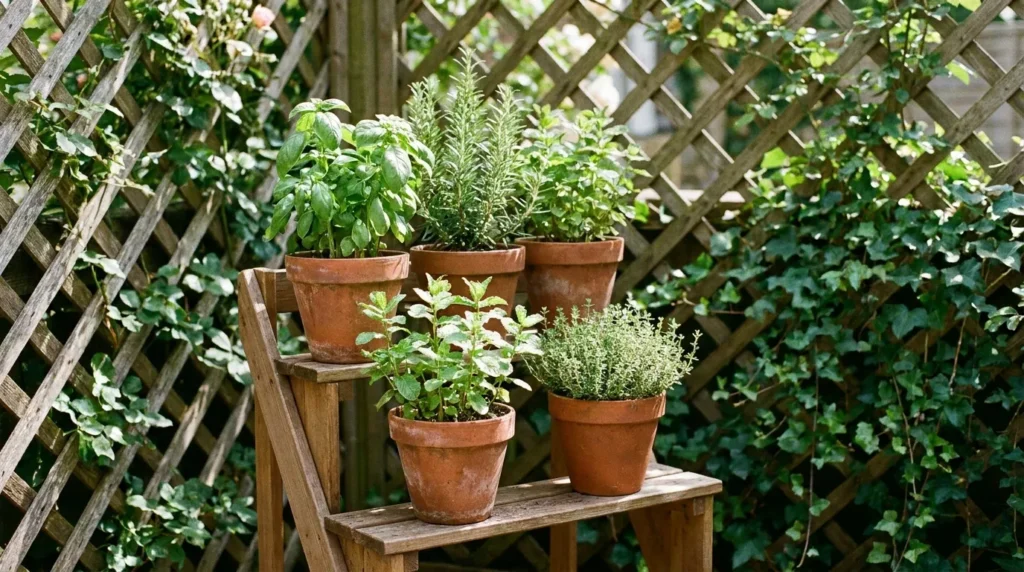
21. Container Herb Gardens
A herb garden in a rectangular planter — basil, rosemary, thyme, mint, and chives — serves double duty as decor and as an ingredient source. Place it along one edge of the patio at knee height on a plant stand. Terracotta or concrete planters in a neutral tone blend with almost any patio palette.
The DIY plant stand projects guide shows how to build a tiered herb stand for under $30.
22. Corner Shelves With Succulents
A corner étagère or tiered plant stand in one corner holds five to eight potted succulents in a footprint of about 18×18 inches. Succulents are ideal for patios because they tolerate heat, drought, and sun with minimal attention. Group odd numbers of pots in varying heights for visual interest. For care tips, the easy-to-grow succulents for beginners guide covers the most forgiving varieties.
23. Window Box Planters on Railings and Fences
Railing-mounted window boxes or fence-top planters get plants off the floor entirely. A 24-inch window box of trailing petunias, trailing lobelia, or sweet potato vine adds color along a fence without taking up any patio space. Fill with a slow-release fertilizer in spring and they require almost no maintenance through fall.
Lighting That Changes the Mood
Lighting does more for a small patio in the evening than any furniture purchase. The right setup transforms a daytime concrete slab into a space you want to spend time in after dark.
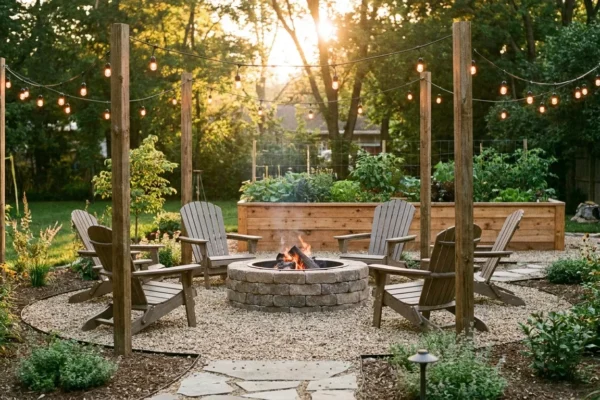
24. String Lights — Grid vs. Drape Style
Two common approaches: grid overhead (lights strung back and forth across the patio ceiling on hooks) and drape style (lights swagged from a central point down to the corners). The grid style creates a more structured ceiling effect and works well on rectangular patios. The drape style gives a softer, more romantic feel.
Use 2700K to 3000K bulbs (warm white) for evening atmosphere. Daylight-temperature (5000K) bulbs make outdoor spaces feel clinical.
25. Solar Lanterns and Pathway Lights
Solar lanterns placed on tables, shelves, or fence posts add light without running electrical cable. Moroccan-style lanterns in matte black or antique brass add architectural detail. For the pathway into the patio, solar stake lights spaced 18 inches apart define the edge of the space and look polished at night with zero ongoing cost.
The cozy outdoor lighting ideas guide covers a full layered lighting plan — ambient, task, and accent — with product recommendations.
DIY Ideas to Save Money Without Sacrificing Style
Not every upgrade requires a purchase. Several of the most effective small patio improvements cost under $50 in materials and a weekend afternoon.
A pallet sofa made from two stacked pallets with outdoor foam cushions creates a large, low seating platform for roughly $40 in materials. The DIY pallet furniture ideas guide covers the safest pallet types to use (heat-treated, marked HT) and how to weatherproof them.
A DIY water feature — a small container pond or stacked stone fountain — adds the sound of running water, which masks street noise and makes a small patio feel calmer. The DIY backyard water features guide includes beginner-friendly builds that don’t require plumbing.
FAQ — Small Patio Questions Answered
How do you make a small patio feel bigger? Use a light-colored outdoor rug to define the zone. Choose furniture at the right scale — nothing wider than 30 inches for individual chairs. Go vertical with plants and lights rather than spreading across the floor. Use a monochrome color palette (beige, white, light gray) to reduce visual clutter.
What is the best furniture for a small patio? A two-seat bistro set for patios under 80 sq ft. A modular sectional with storage ottoman for 100 to 144 sq ft spaces. Always prioritize stackable, foldable, or multi-function pieces.
How much does a small patio cost? A basic 100 sq ft patio costs $800 to $4,000 for materials and installation. Premium finishes or complex drainage can push the total above $10,000. Use the patio cost estimator to get a figure based on your specific dimensions and material choices.
Can I add a patio to a rental apartment or balcony? Yes. Freestanding furniture, modular raised flooring tiles (no drilling required), pressure-fit tension rods for curtains, and hook-over railing planters require no permanent modification. All the core design principles — rugs, vertical plants, string lights — work on balconies too. The cozy balcony ideas makeover guide covers rental-friendly approaches specifically.
What plants work best on a small sunny patio? Lavender, rosemary, sedums, ornamental grasses, and petunias all handle full sun and tolerate heat. For semi-shade patios: ferns, hostas, astilbe, and impatiens. Keep them in containers so you can rearrange the space as needed.
Conclusion
A small patio doesn’t need more square footage — it needs better decisions. Start at the ground with the right flooring and a defining rug. Get the clearances right before buying a single chair. Use the walls and overhead space before filling the floor. Add greenery in corners and on vertical surfaces. Then light it properly at night.
Apply even five of these 25 ideas and the space will feel different within a weekend. The concrete slab problem isn’t a size problem. It’s a design problem — and design problems are solvable.
For more inspiration on transforming your outdoor space, the small patio design inspiration ideas guide covers additional before-and-after examples with real layouts.

Leave a Reply