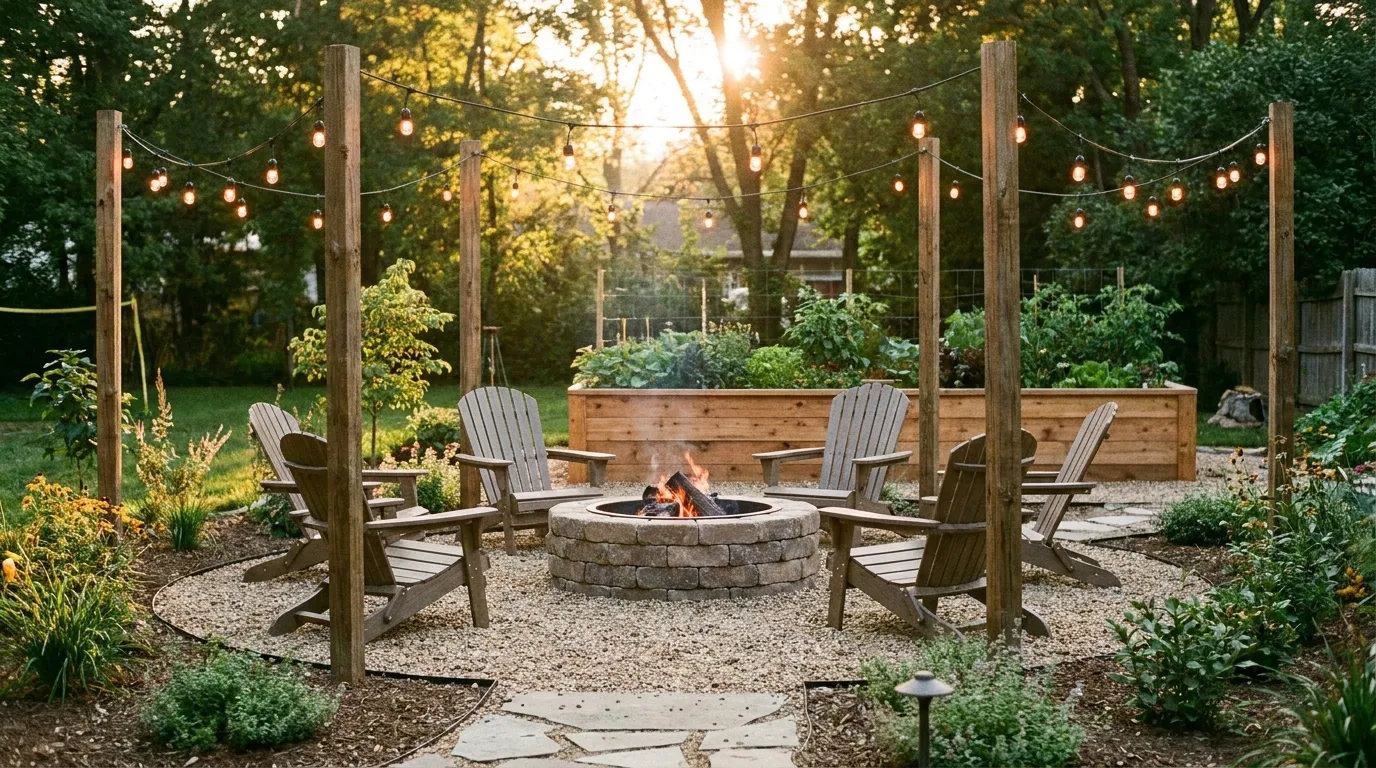
$1,000 is enough to completely change how your backyard looks and feels. Not a cosmetic touch-up — a real, usable transformation.
Every project on this list includes specific material costs. Not vague ballpark figures. Actual numbers you can take to the hardware store. Whether you have $150 to spend this weekend or the full $1,000 ready to go, there is a clear path forward.
Start with the tier that fits your budget. Or stack several smaller projects together to hit that $1,000 ceiling with maximum impact.
Before anything else, use the Home Renovation Budget Planner to map your total spend before buying a single bag of gravel. It takes five minutes and prevents the most expensive rookie mistake — running out of budget halfway through a project.
What $1,000 Actually Gets You
A full professional landscape renovation runs $3,000–$15,000. That is not what this is.
What $1,000 buys is a targeted DIY makeover. You pick 3–5 specific upgrades that work together, and the yard goes from neglected to intentional. A gravel seating pad, a fire pit, and string lights together cost under $350. That leaves $650 for anything else on this list.
The most common mistake is buying cheap versions of ten things. The yard ends up full of mismatched items that do not work together and wear out fast. Three well-chosen projects beat ten mediocre ones every time.
Before spending anything, identify which area of your yard you actually want to use — and what it is missing most. Shade, seating, a focal point, or a reason to be outside after dark. That shapes every decision below.
Projects Under $100
These are quick wins. Each one takes a weekend or less and delivers an immediate visual upgrade.
1. DIY Block Fire Pit — $40 to $80
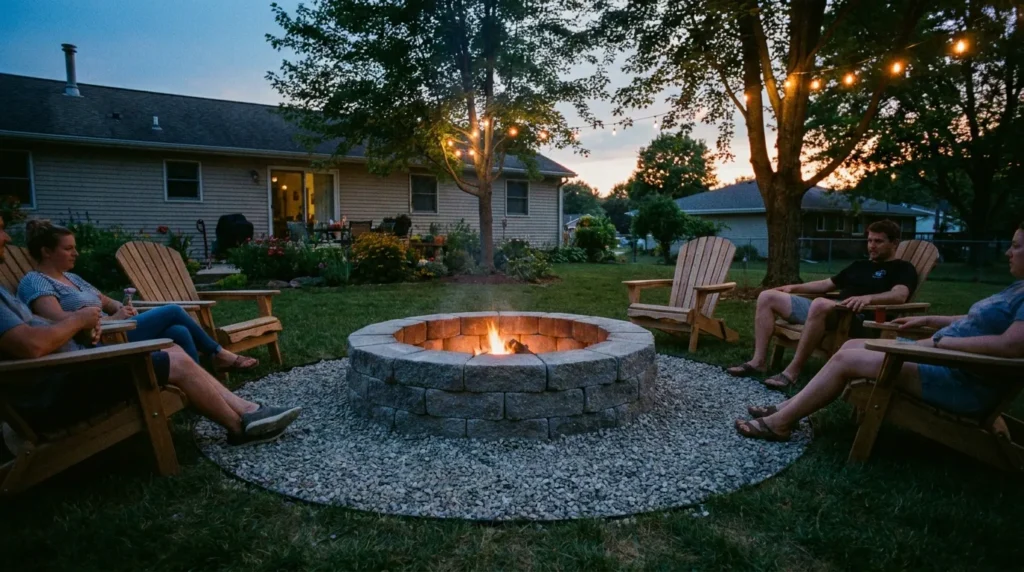
Stack 36 retaining wall blocks in a 3-foot circle on a 2-inch gravel base. That is the entire project. No mortar. No special tools. Total material cost at any home improvement store: $40–$80, depending on block size and your region.
This is the highest-impact project per dollar on this list. It gives the yard a focal point and an actual reason to be outside after dark.
One critical step before you start: check local ordinances. Some municipalities restrict open burning, and many HOAs have specific rules about fire features. A 10-minute online search prevents a costly mistake. See the full fire pit safety tips and design ideas guide for placement rules, clearance distances, and safe fuel options.
2. LED String Light Canopy — $30 to $60
String lights change how a yard feels — specifically at 8 p.m. on a warm evening when you actually want to be outside. The difference between an overhead canopy of warm light and a dark yard is the difference between using the space and going inside.
Buy weatherproof LED strands, not incandescent. LEDs last 25 times longer and use 80% less electricity. A 48-foot strand covers most standard backyards. Run them between two poles, between trees, or from the house out to a fence post.
Color temperature matters. Warm white (2,700K) creates an inviting, relaxed atmosphere. Cool white reads as fluorescent and kills the mood.
Cost: $30–$60 for one or two strands. For more setup ideas and fixture options at different price points, browse these cozy outdoor lighting ideas that work on any budget.
3. Container Herb Garden — $25 to $50
Six to eight herbs in a cluster of containers costs $25–$50. Basil, rosemary, thyme, mint, chives, and cilantro are the most useful and the easiest to start from transplants.
Use terracotta pots, repurposed tin cans, or wood crates. Arrange them near the kitchen door — placement matters. Herbs you have to walk to the far end of the yard for do not get used.
This project adds color, fragrance, and function to a small space without requiring any ground preparation.
Projects from $100 to $300
This is where structural upgrades happen. Projects that define areas of the yard and make it feel finished rather than accidental.
4. Gravel Seating Pad — $120 to $280
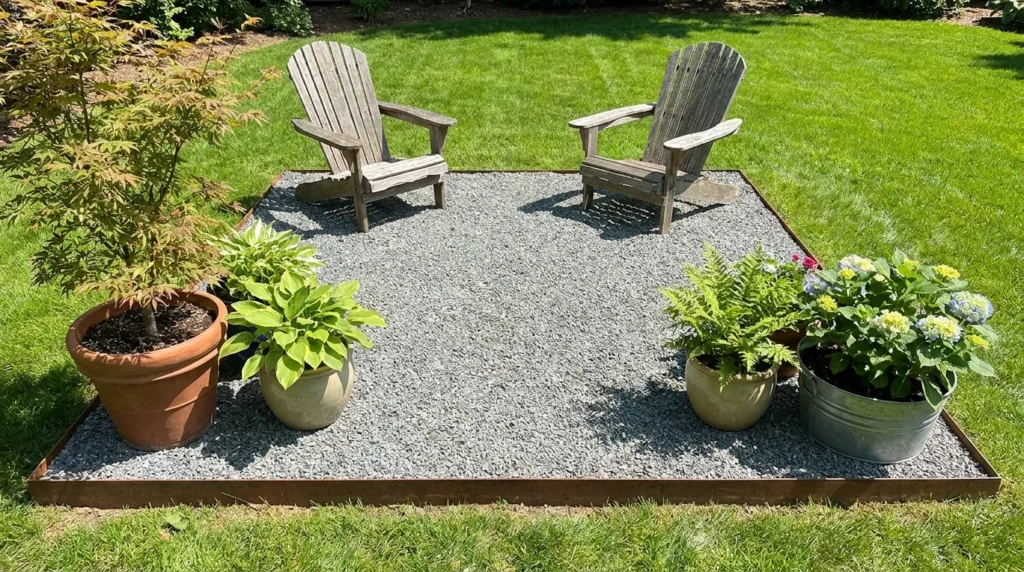
A 10×10-foot gravel pad transforms bare lawn into a defined outdoor room. The process is straightforward: excavate 4 inches of soil, lay landscape fabric, add a 2-inch compacted gravel base, then top with 2 inches of pea gravel or decomposed granite.
Decomposed granite packs firmer and stays put underfoot. Pea gravel feels softer but shifts more with foot traffic. For 100 square feet you need roughly 1.5 tons of topping material.
Before ordering, use the Gravel Calculator to get the exact quantity for your specific dimensions. Overestimating by even half a ton adds $40–$70 in unnecessary cost and a heavy bag you cannot return.
Add steel or timber edging at $30–$60 to keep the gravel contained. Total project cost: $120–$280 depending on material type and your region.
For design inspiration on furnishing and finishing the space once the base is done, browse these small patio design ideas.
5. Cedar Raised Vegetable Bed — $100 to $220
A 4×8-foot cedar raised bed runs $100–$220 in materials. Cedar resists rot for 10–20 years without chemical treatment — no pressure-treated wood needed, which matters if you are growing food.
Fill with a garden soil mix: roughly 60% topsoil, 30% compost, and 10% perlite for drainage. A 4×8 bed at 12-inch depth requires approximately 32 cubic feet of fill.
This project actually pays you back. One 4×8 bed can produce $300–$600 worth of vegetables per growing season. Tomatoes, peppers, zucchini, lettuce, and beans give the highest yield per square foot.
Once plants are in the ground, pair them strategically using companion planting basics to improve yields without spending more.
6. Shade Sail — $80 to $250
A triangular or rectangular shade sail mounted between two posts — or one post and the house — creates instant coverage over a seating area. A 12×12-foot sail comfortably covers four to six chairs.
HDPE fabric blocks 90–95% of UV rays and is removable for winter storage. Installation requires concrete-set post anchors ($20–$40 per post) and takes 2–3 hours. Total cost with hardware: $130–$250.
This changes the usability of your yard during summer afternoons. Without shade, most people go inside. With it, they stay out.
Projects from $300 to $600
Weekend-scale builds. Each one requires a planning session and a couple of hardware store trips. The payoff lasts years.
7. Stepping Stone Garden Path — $180 to $380
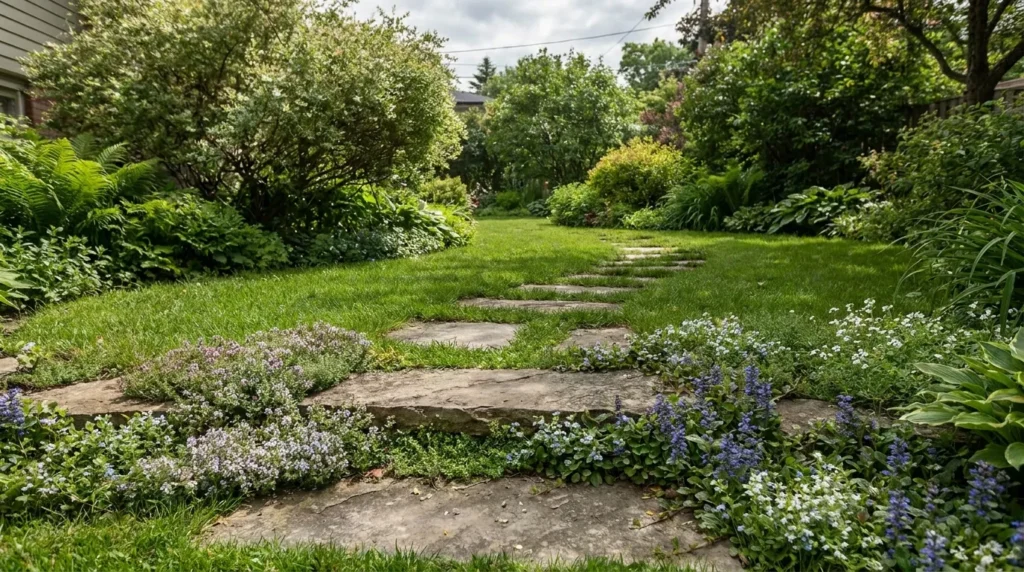
15 to 20 natural stone or concrete stepping stones connect the back door to the fire pit, garden, or seating area. Set them 22–24 inches apart (center to center). Excavate 3–4 inches per stone, bed each one in sand, backfill with soil, and tamp firm.
Natural flagstone runs $1.50–$3 per pound. Concrete pavers cost $1–$2 each. For a 20-stone path using natural stone, budget $200–$320 in materials plus $20–$40 in sand.
A path does more than connect two points. It tells guests where to walk, protects the lawn from compaction in high-traffic zones, and makes the yard feel intentionally designed.
8. Privacy Screen — $150 to $400
A 6-foot wood slat screen or a row of clumping bamboo in planters gives you privacy from neighboring yards without a full fence replacement.
Critical note on bamboo: Only use clumping varieties — Fargesia or Bambusa are the two most common at garden centers. Running bamboo (Phyllostachys) spreads via underground rhizomes and will take over your yard within 2–3 years. The distinction is not always clearly labeled. Ask before you buy.
For a wood slat screen, pressure-treated 1×4 boards mounted to a simple 4×4 post frame cost $150–$300 for an 8-foot-wide section. Paint or stain before assembly.
See the full list of backyard privacy solutions for additional options at different price points, including trellis-based and planting-based approaches.
9. Outdoor Movie Setup — $150 to $350
A portable projector ($80–$180) paired with a white tensioned sheet or an inflatable screen ($60–$120) gives you a functional outdoor theater. Run an extension cord from the house, add a Bluetooth speaker ($30–$60), and the setup is complete for under $350.
This pairs naturally with the fire pit and string lights. All three together total $450–$500 — a complete outdoor entertainment zone for under $500.
For the full equipment list and screen positioning tips, see the complete DIY outdoor movie night setup guide under $300.
Projects from $600 to $1,000
Statement pieces. These are the upgrades someone notices the moment they walk into your yard.
10. Pergola Kit — $400 to $850
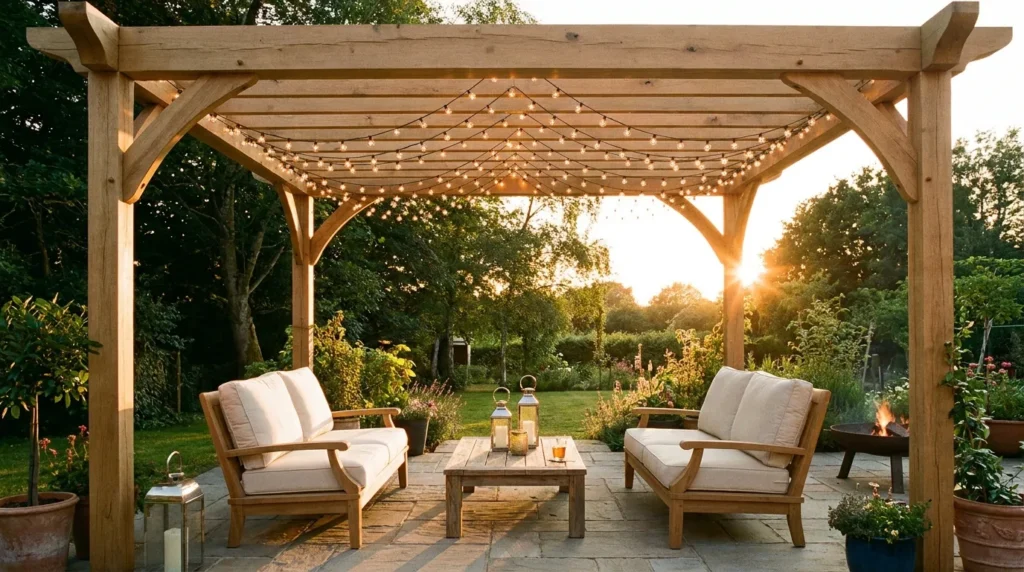
Pre-cut pergola kits at home improvement stores range from $400 for an 8×8-foot model to $850 for a 12×12-foot version. All lumber and hardware is included. Two people can complete installation in a full weekend.
Stain or paint after installation to match your house exterior. Add string lights across the beams and you have a finished, permanent outdoor structure for under $900.
For style variations, roof options, and how to customize a kit beyond the standard build, browse pergola design ideas for backyards.
11. Full Fire Pit Seating Area — $500 to $950
This combines the block fire pit with a paver surround and four chairs. Here is the detailed cost breakdown:
- Paver circle (8-foot diameter, ~50 sq ft): $150–$250 in concrete pavers
- Block fire pit (36 blocks): $50–$80
- 4 Adirondack chairs (wood or poly resin): $180–$500 depending on material
- Gravel base under pavers: $30–$50
Total: $410–$880. This is the best-value complete outdoor living setup at this price point. Every element is permanent, weather-resistant, and functional for years with zero maintenance.
To estimate exact paver quantities and total cost before you go shopping, the Patio Cost Estimator gives you a reliable number based on your actual dimensions.
12. Flagstone Patio — $500 to $950
100 square feet of flagstone — large enough for a 6-person dining set — costs $500–$950 in materials. Natural flagstone runs $3–$7 per square foot depending on stone type and region. You will also need a 4-inch compacted gravel base ($50–$80) and coarse sand ($20–$30).
Set each stone in sand on the compacted base. No mortar required for a dry-set installation. The work is physically demanding — individual flagstones weigh 30–100 pounds — but requires no special skills beyond patience and a level.
For furniture to complete the space without adding to your materials budget, see these DIY pallet furniture ideas that pair well with a natural stone patio.
How to Combine Projects Without Exceeding $1,000
Most guides stop at the list. Here are three complete makeover plans that stay under $1,000 and work as coherent spaces:
Plan A — Outdoor Living Room ($330–$430)
| Project | Cost |
|---|---|
| Block fire pit | $60 |
| Gravel seating pad (10×10) | $200 |
| LED string lights | $50 |
| Outdoor rug (5×8 ft) | $50–$80 |
| Total | $360–$390 |
Remaining budget: $610–$640 for future phases.
Plan B — Food Garden Setup ($350–$450)
| Project | Cost |
|---|---|
| Cedar raised bed (4×8) | $160 |
| Herb container garden | $40 |
| Wire mesh compost bin | $0–$30 |
| Stepping stone path to garden | $160–$220 |
| Total | $360–$450 |
Plan C — Full Entertainment Zone ($750–$950)
| Project | Cost |
|---|---|
| Pergola kit (8×8) | $480 |
| String lights | $50 |
| Outdoor movie setup | $200 |
| Fire pit | $60 |
| Total | $790–$870 |
Budget Mistakes That Blow the $1,000 Limit
Skipping material quantity calculations. Ordering 20% too much gravel on a large pad adds $60–$100 instantly. Measure your space, then calculate.
Leaving out landscape fabric. Skipping it under a gravel patio saves $30 but means weeds pushing through by next season — then you are digging the entire thing up.
Starting with the most expensive project. Spend under $200 first. See how a project goes, how long it actually takes, and which tools you need. Then scale up.
Buying the cheapest outdoor chairs. An $89 chair set lasts one season in most climates. Two solid chairs at $80 each last a decade. The math is straightforward.
Not checking HOA or fire regulations first. Pergolas may require structural permits. Fire pits may be banned or restricted in certain zones. Find out before installation, not after.
Frequently Asked Questions
Can I redo my backyard for under $1,000? Yes. A gravel seating pad, fire pit, and string lights cost $350–$430 combined and create a complete outdoor living setup. Additional budget goes toward more projects.
What is the cheapest backyard improvement with the most impact? LED string lights at $30–$60. They change how a space feels after dark with almost no installation effort or skill required.
How long do these DIY projects take to complete? Most projects take one full weekend or less. The flagstone patio and pergola kit are the most time-intensive — plan two full days for each with a helper.
Do I need professional help for any of these projects? No. Every project on this list is designed for homeowners with basic tool skills. A tape measure, level, shovel, and rubber mallet handle the majority of them.
Which project adds the most resale value? A defined patio area — gravel, flagstone, or pavers — consistently adds more perceived value than decorative projects. Outdoor living space is a top search criterion for buyers in most US markets.
One Last Thing
A good backyard does not need a big budget. It needs a clear plan and a few projects that work together as a system.
Start with one project this weekend. The fire pit and string lights cost less than a restaurant dinner and take four hours to set up. Everything else builds from something that already works.


Leave a Reply