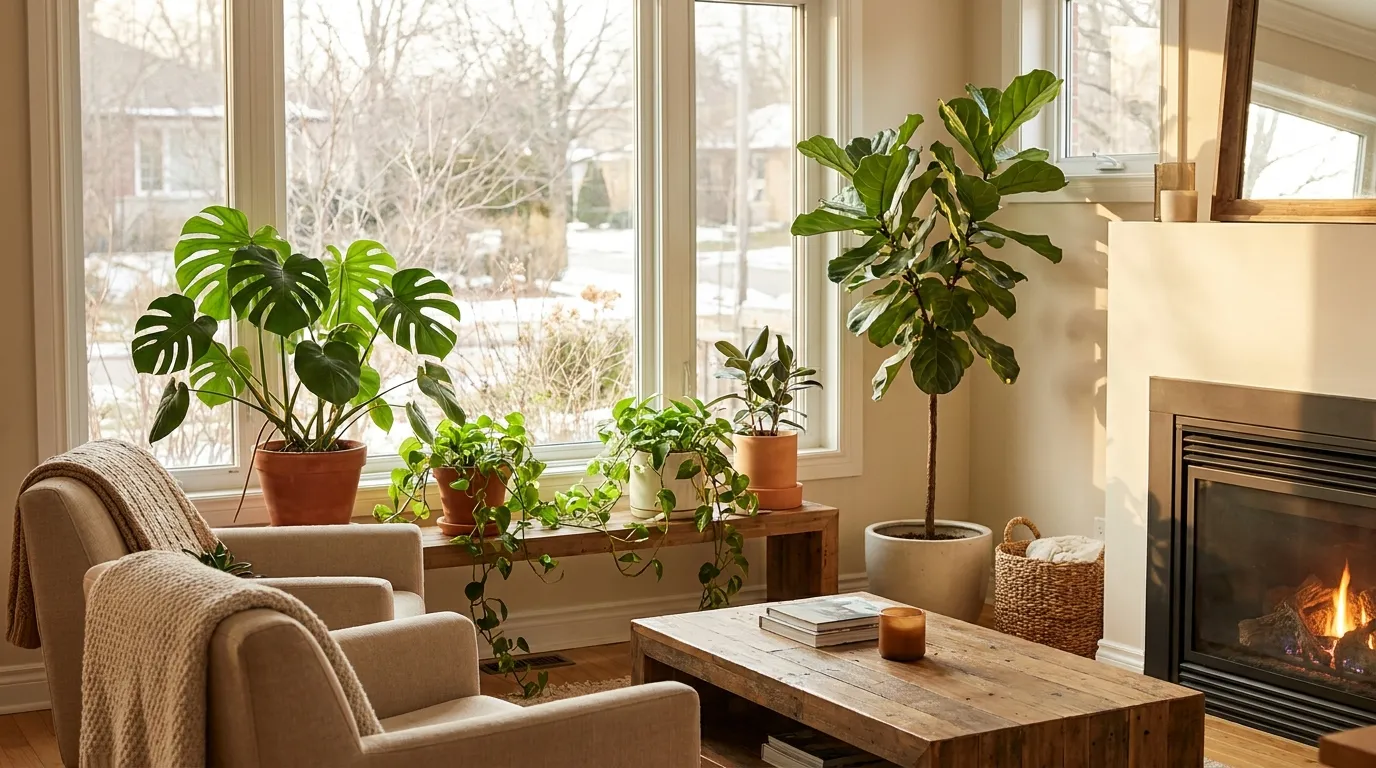
Most houseplants don’t die in winter because of the cold. They die because their owners keep watering, fertilizing, and caring for them like it’s July.
Winter changes three things that matter most to plants: light intensity drops by up to 50%, indoor humidity falls to 10–20% because of central heating, and plant growth slows to near zero. Every care routine built around spring and summer stops working the moment the heating comes on.
The fixes aren’t complicated. But you do need to know exactly what to change — and what to leave alone.
Why Winter Hits Indoor Plants Hard
Plants respond to seasons even when they’re sitting on a windowsill indoors. Shorter days slow photosynthesis. Slower photosynthesis means slower water uptake. And slower water uptake means the soil stays wet far longer than it did in summer. That’s where the damage begins.
At the same time, your heating system quietly destroys the air moisture that tropical plants depend on. A Philodendron or Calathea evolved in jungle air sitting at 60 to 80% humidity. Your centrally heated home in January probably reads 15 to 30%.
Cold drafts from windows and exterior doors add a third layer of stress. Plants positioned near single-pane glass can experience temperature swings of 10 to 15°F in a single night — enough to trigger leaf drop in sensitive species.
Understanding these three pressures — less light, drier air, temperature instability — makes the rest of this guide make sense. Every tip below addresses at least one of them.
1. Light — Move Plants, Don’t Just Hope
In winter, the sun sits lower in the sky and daylight hours shrink by 30 to 40% depending on your latitude. Near a north- or east-facing window, light levels can drop by half compared to what the same window delivers in July.
Move plants closer to windows. South-facing windows get the most winter sun. West-facing is the next best option. If your plant was thriving near a bright room last August, it may need to be physically repositioned by late October.
Clean your windows while you’re at it. Dust and grime on glass can reduce light transmission by up to 15%. It takes two minutes per pane.
When natural light isn’t enough, grow lights fill the gap. Set LED grow lights to run 12 to 13 hours per day. Full-spectrum LEDs are more energy-efficient than fluorescent tubes and generate less heat near foliage. Position them 6 to 12 inches above the plant canopy for most common houseplants.
Cacti, succulents, and citrus trees are the plants that struggle most with winter light levels. They need more direct light than most windows provide between November and February. These species benefit from supplemental lighting before you see visible symptoms.
If you’re filling darker areas of your home with new plants this season, choose varieties built for it. This guide to low-light plants that thrive in dark rooms covers species that handle reduced winter light without struggle.
2. Watering — Less Is Almost Always Right
Overwatering is the single most common way houseplants are killed in winter. Slow-growing plants use very little water. Soil dries slowly in cool rooms. If you’re still watering on a summer schedule, you’re creating the conditions for root rot every single week.
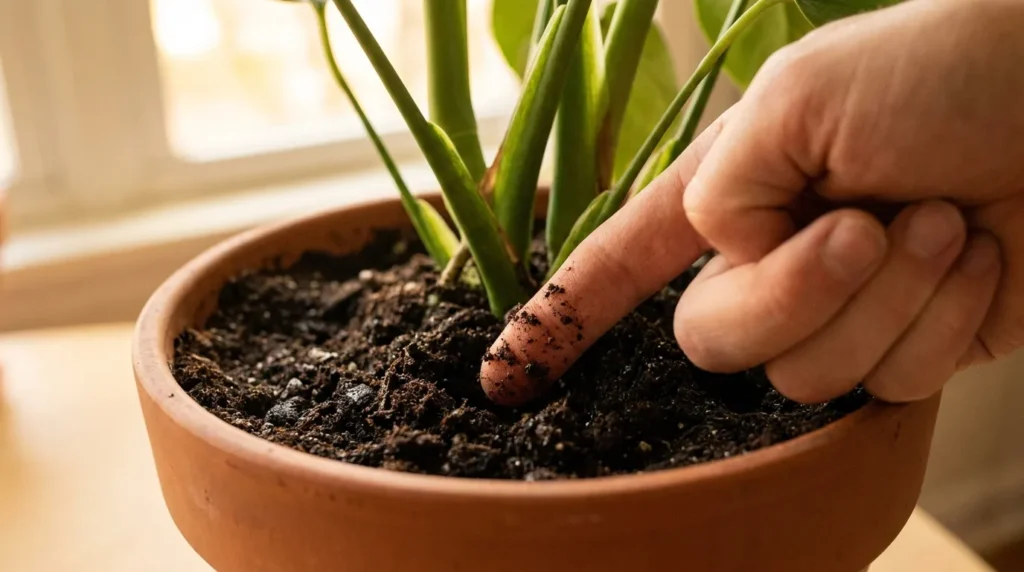
Stop watering on a schedule. Use the soil test: push your finger 1 to 2 inches into the soil. If it’s still damp, wait. If it’s dry, water thoroughly, let it drain fully, and then empty the saucer. A plant sitting in standing water overnight is a root rot problem in progress.
Water volume matters alongside frequency. Cut back the amount you use by roughly 25% compared to summer. The goal is to moisten the root zone, not saturate it.
Water temperature is something most guides skip. Cold tap water shocks the roots of tropical plants. Let tap water sit at room temperature for 30 to 60 minutes before you use it. This also lets some chlorine dissipate, which is worth doing for sensitive species like Spider Plants and Peace Lilies.
Different plants need different thresholds:
- Succulents and cacti: water once every 3 to 6 weeks in winter. Some need nothing at all in December and January.
- Tropical plants (Monstera, Pothos, Philodendron): water every 10 to 21 days, depending on pot size and room temperature.
- Ferns and citrus: these are exceptions. They prefer consistently moist — not wet — soil and shouldn’t dry out completely.
Soggy soil, yellowing lower leaves, and a heavy pot that stays heavy for days are the main overwatering tells. If you’re seeing any of these, the common signs of overwatering in plants guide breaks down how to diagnose the problem accurately and recover quickly.
If you want to stop guessing and build a proper seasonal routine, the watering schedule generator can help you map out a schedule based on your specific plants and conditions.
3. Humidity — Your Heating System Is the Enemy
Most tropical houseplants prefer 40 to 60% relative humidity. A centrally heated home in winter typically reads 10 to 20%. That gap is large enough to cause brown leaf tips, crispy edges, pest infestations, and visible leaf drop within a few weeks.
The most effective fix is a humidifier. A room-sized unit targeting 40 to 50% RH solves the problem comprehensively. Smaller tabletop humidifiers work well for 1 to 3 plants grouped closely. Place it near your most humidity-sensitive plants — Ferns, Calatheas, Orchids, and Ficus are at the top of that list.
The pebble tray method is lower-tech and costs almost nothing. Fill a shallow tray with 1 inch of small pebbles. Add water to just below the top surface of the pebble layer — the pot bottom should not touch the water. As the water slowly evaporates, it raises humidity directly around the plant. It won’t transform a full room, but it works well for individual pots.
Grouping plants together creates a shared microclimate. As plants transpire — releasing water vapor through their leaves — the air immediately surrounding them holds more moisture. A cluster of 5 or more plants in one spot can raise local humidity by 5 to 10 percentage points.
Misting is widely recommended but overstated. It raises humidity for roughly 20 to 30 minutes, and then the effect is gone. On Orchids and plants with fuzzy leaves, misting onto foliage can encourage fungal issues. It’s not a substitute for a humidifier or pebble tray. If you mist at all, do it in the morning so any moisture on leaves can evaporate before nightfall.
4. Temperature and Drafts — The Silent Stressors
Most common houseplants prefer indoor temperatures between 65 and 75°F (18 to 24°C) during the day, and no lower than 55°F (13°C) at night. Below 50°F, tropical species start showing cold stress symptoms: dark patches on foliage, wilting, sudden leaf drop.
Keep plants away from:
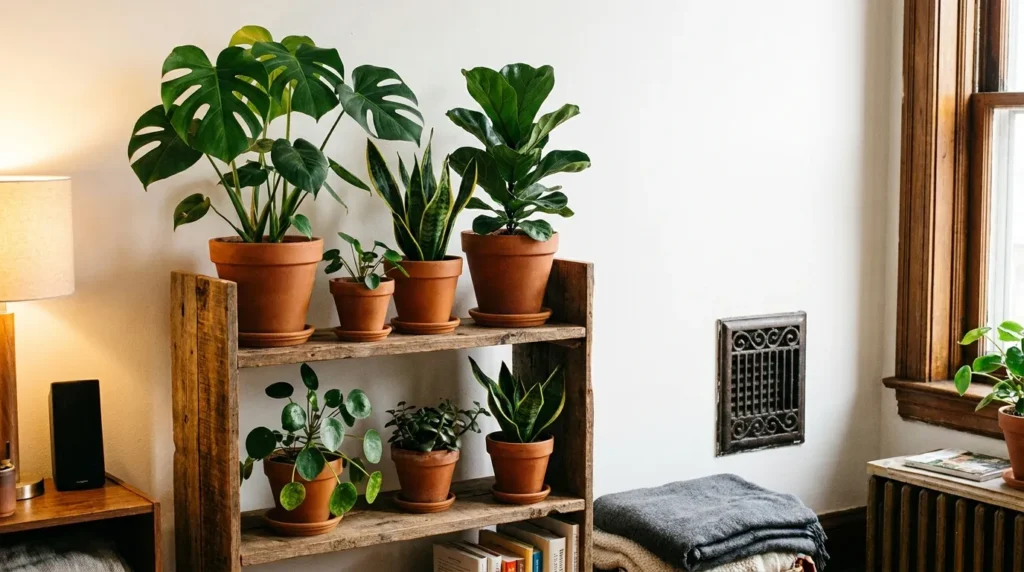
- Heating vents and radiators — the blasting hot air desiccates leaves rapidly
- Drafty exterior doors and single-pane windows — the temperature swings are more damaging than the cold itself
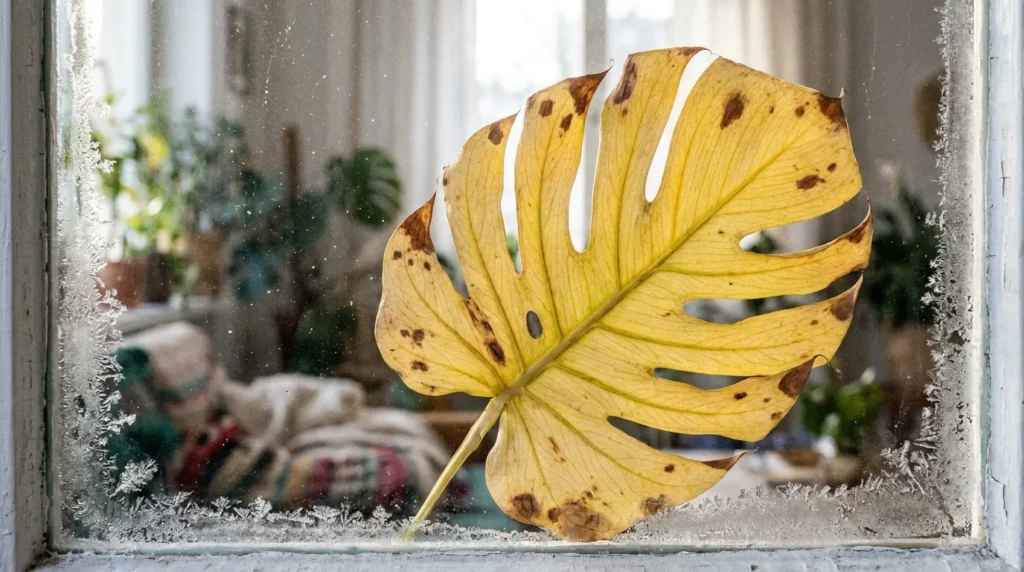
- Window glass — leaves touching cold glass during a hard freeze can get frost damage
The temperature difference between a drafty windowsill and the center of the same room can exceed 10°F on a cold night. If you can feel a draft with your hand, that plant can feel it too.
If plants must stay near windows, move them a few inches back from the glass after dark. On particularly cold nights, slipping a folded piece of cardboard between the plant and the pane provides enough insulation to prevent damage.
5. Fertilizing — Stop Until Spring
A dormant or slow-growing plant cannot process fertilizer. The nutrients it can’t absorb accumulate as salt in the soil, damage root tissue, and cause brown leaf tips — which is often mistaken for a humidity or watering problem.
The rule is simple: no fertilizer from November through February for most houseplants. Resume in late February or early March when new growth visibly begins.
The exception is a plant that’s genuinely still growing — one under strong grow lights, in a consistently warm space, and actively producing new leaves. For that plant, fertilize once monthly at quarter strength using a balanced 10-10-10 formula. Anything more risks burning the roots.
For the rest, dormancy isn’t something to fight. It’s the plant conserving energy and doing exactly what it evolved to do. When growth returns in spring, a structured fertilizing schedule for indoor plants will help you ramp back up correctly without stressing the root system.
6. Pest Control — Winter Is Peak Spider Mite Season
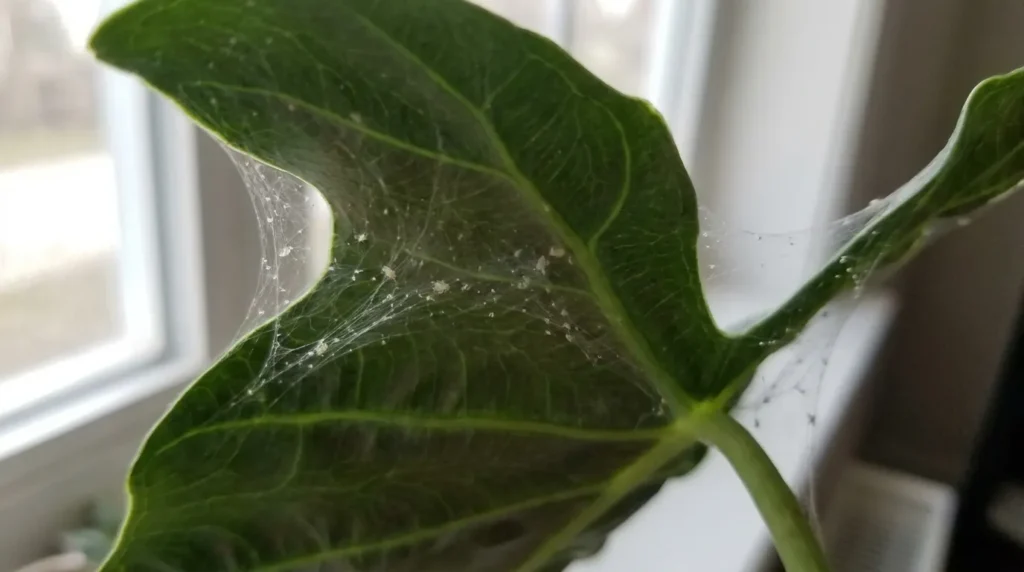
Spider mites thrive in warm, dry conditions — which describes every centrally heated home in January. They reproduce in under two weeks and spread between plants quickly. By the time webbing is visible, the infestation is already significant.
Signs of spider mites: fine webbing on the undersides of leaves, tiny moving specks, stippled or mottled foliage that looks bleached. To confirm, tap a leaf over white paper and look for specks that move.
Signs of mealybugs: cottony white clusters at leaf joints, stem nodes, and where leaves meet the soil surface.
Signs of fungus gnats: small flies hovering near the soil. The adults are mostly harmless, but their larvae feed on fine roots and can stunt growth in young plants. Consistently damp soil is what attracts them.
Treatment:
- Spider mites: insecticidal soap or ¼ teaspoon of liquid castile soap dissolved in 1 quart of room-temperature water. Spray the undersides of leaves thoroughly. Repeat every 5 to 7 days for 3 weeks.
- Mealybugs: wipe individual clusters with a cotton swab dipped in rubbing alcohol. For heavy infestations, insecticidal soap spray applied to all surfaces.
- Fungus gnats: let soil dry out more between waterings. Use yellow sticky traps for adults. Diluted neem oil watered into the soil disrupts larvae.
Inspect plants bi-weekly throughout winter. A single infested plant caught early is a 20-minute fix. A colony spread across 10 plants is a weeks-long project.
For more comprehensive coverage of plant disease and pest identification, this guide to common plant diseases and solutions covers a wide range of issues. If you prefer to treat without synthetic chemicals, organic pest control for potted plants covers plant-safe options in detail.
7. What NOT to Do in Winter
Don’t repot. Roots disturbed in winter have no active growth to draw on for recovery. The risk of root rot in cold, slow-draining soil after repotting is significantly higher. Wait until late February at the earliest — and watch for new growth as your signal. When spring arrives and your plant outgrows its container, this guide to signs your plant needs repotting will help you time it right.
Don’t propagate. Cuttings taken in January rarely root with any reliability. Low light and cool temperatures mean slow or no root development. Wait until March when light and warmth support healthy rooting.
Don’t prune hard. Removing dead or yellowing leaves is fine anytime. But heavy pruning cuts stress a plant that has no surplus energy to drive new growth. Reserve major shaping and cutting back for spring.
Don’t try to force growth. Extra watering and extra fertilizer don’t compensate for low winter light. They create problems. A dormant plant wants stable conditions, not stimulation.
Reviving a Plant That’s Already Struggling Mid-Winter
If a plant is already showing visible distress — yellowing leaves, limp stems, soil that stays wet for weeks — act directly rather than waiting it out.
Step 1: Check the roots. Unpot the plant and examine them. Healthy roots are white or light tan and firm. Rotten roots are brown, soft, and smell distinctly bad. Trim all rotten material with sterilized scissors, let the root ball air-dry for 30 minutes, and repot into fresh, dry potting mix.
Step 2: Move it to maximum available light. A struggling plant needs every bit of photosynthesis it can get. South-facing window or directly under a grow light.
Step 3: Hold off on watering for 10 to 14 days after repotting. Let the root system stabilize before you add any more moisture.
Step 4: No fertilizer. A stressed plant cannot process nutrients and can be burned by them. Skip feeding entirely until growth resumes.
Step 5: Isolate it from your other plants until you’ve confirmed there’s no pest problem hitching a ride.
Most plants, if caught before root rot has gone systemic, can recover within 4 to 8 weeks with this approach.
FAQs: Winter Indoor Plant Care
Do indoor plants need less water in winter? Yes. Growth slows significantly and soil dries far more slowly in cooler indoor temperatures. Overwatering — not underwatering — is the leading cause of houseplant death from November through February. Use the finger test, not a fixed schedule.
Should I fertilize houseplants in winter? No, in most cases. Dormant and slow-growing plants can’t use nutrients, and excess fertilizer causes salt buildup that damages roots. Wait until late February or early March. If a plant under grow lights is still actively producing new leaves, fertilizing at quarter strength once monthly is acceptable.
Why are my plant’s leaves turning yellow? Yellow leaves in winter almost always trace back to overwatering, insufficient light, or both. Cold drafts and low humidity can also cause leaf discoloration and drop. Check the soil moisture first — if it’s been staying wet for more than a week at a time, reduce watering frequency before assuming anything else.
Can I use tap water on plants in winter? Yes, but let it reach room temperature before using it. Cold tap water shocks the roots of tropical plants. If your tap water is heavily treated with fluoride or chlorine, filtered or distilled water is worth using for sensitive species like Spider Plants and Dracaenas.
Do indoor plants go dormant? Most enter a state of semi-dormancy — growth slows dramatically but doesn’t fully stop. True dormancy, where the plant shuts down completely, is more common in plants brought inside from outdoors for the season. Either way, the care response is the same: reduce watering, hold fertilizer, maintain consistent temperatures, and don’t force growth.
Getting Ready for Spring
By late February, watch for new leaf buds, pale fresh shoot tips, or soil that dries noticeably faster than it did a month ago. These are the signs that the plant is coming back online.
When you see them, gradually increase watering over 2 to 3 weeks. Resume fertilizing at half strength in March, working up to a regular schedule by April. Repot any root-bound plants before the main growing season hits. Building your seasonal plant transitions into a broader home routine — alongside things like deep cleaning, storage, and outdoor prep — makes it easier to stay consistent. This seasonal home organization guide covers how to structure those transitions across all four seasons.
Winter is about keeping plants stable, not growing them. Plants that come through it in good shape consistently put on their best growth the following spring. Give them rest, not intervention.

Leave a Reply