
Most homes don’t have an organization problem — they have a system problem. Things pile up every few months not because you’re disorganized, but because there’s no repeatable process in place. You handle spring differently from fall. Winter prep gets rushed. Summer happens and nothing changes until chaos forces it.
This guide fixes that. It gives you a zone-based, season-by-season framework that you run once, refine slightly each year, and rely on permanently. No starting from scratch every three months.
The approach here is built around four organizing “zones” — Outdoor, Personal, Entertaining, and Working — each matched to the season it gets the most use. You hit the right spaces at the right time, every time.
Why Seasonal Organization Works (and Why Winging It Doesn’t)
An organized home isn’t maintained in one big annual burst. It’s maintained in four smaller ones, timed with how you actually live.
Your wardrobe, pantry, garage, and guest spaces all shift with the calendar. Treating them as static — organize once and done — is why they fall apart within weeks. When you sync your organizing efforts to the seasons, you’re working with your natural habits instead of against them.
There’s also a practical reason: decision fatigue. An overstuffed closet costs you mental energy every single morning. Rotating seasonal items out means 30–40% fewer decisions each day, simply because you’re only looking at what you’ll actually wear or use right now.
If you’ve been overwhelmed by where to even start, the KonMari method explained simply is worth reading before you dive in — it gives you a mindset reset that makes the physical work much easier.
The Core System Before You Start
Before any season-specific work, set up the three foundations. Everything else plugs into these.
Think in Zones, Not Rooms
The four zones and their primary seasons:
- Outdoor Zone (Spring): garage, yard, patio, shed, cars
- Personal Zone (Summer): bedrooms, bathrooms, closets
- Entertaining Zone (Fall): entryway, living room, dining room, guest spaces
- Working Zone (Winter): kitchen, laundry room, home office
This isn’t rigid. A bedroom closet gets touched in spring AND fall. But having a primary zone per season prevents the paralysis of trying to do everything at once.
The 3-Bin Rule for Every Transition
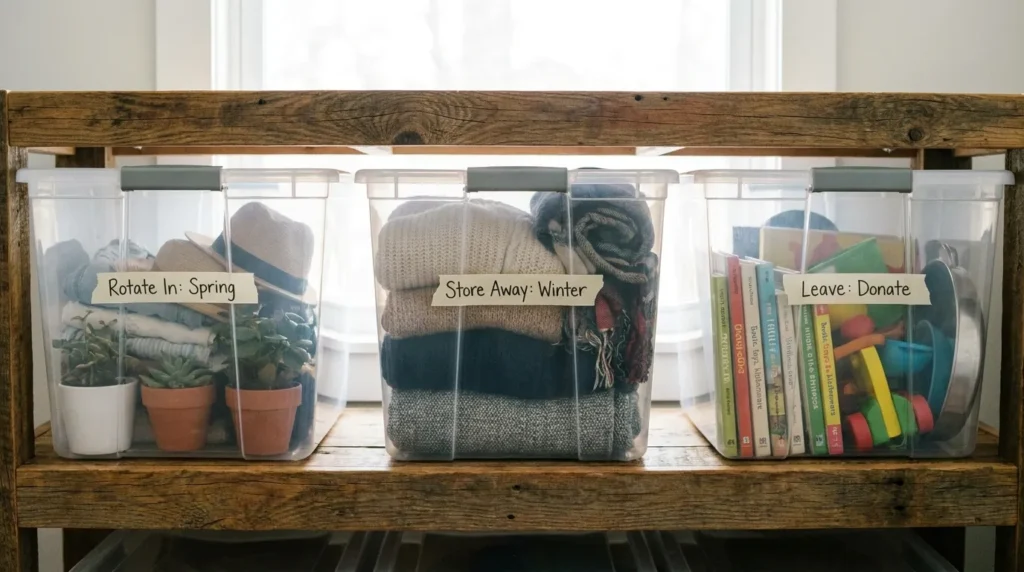
Every seasonal sort gets three bins:
- Keep & Rotate In — items moving into active use
- Store Away — off-season items going into storage
- Leave — donate, sell, or discard
Run every item through that filter. It takes the guesswork out of the process and keeps you moving instead of stalling on individual decisions. This is also the core process behind time-saving organization systems that actually work.
Label Everything — With Specificity
“Winter Clothes” is a useless label. “Winter: Men’s Sweaters + Thermal Base Layers” is useful.
Spend two extra minutes on labeling now and save 20 minutes of rummaging later. Label the bin, the shelf it lives on, and if you have multiple storage areas, note the location on the label too.
Spring Organization (March–May)
Zone: Outdoor
Spring is the biggest transition of the year. Winter leaves behind clutter in nearly every room, and there’s outdoor work waiting. Start indoors, then move out.
Deep Clean First, Organize Second
You can’t organize a dirty space effectively. Before any sorting happens, clean surfaces, vacuum under furniture, and wipe down shelves. Use the declutter before deep cleaning room-by-room checklist to work through this systematically.
If you spot any mold or mildew during your deep clean — common in bathrooms and basements after winter — deal with it before boxing anything back up. The safe DIY mold removal guide walks you through the process without harsh chemicals.
Wardrobe Rotation: Winter Out, Spring/Summer In
Pull every winter item — heavy coats, wool sweaters, thermal layers, flannel shirts. Wash everything in hot water before storing, even if it looks clean. Skin oils and food particles attract insects over a 6-month storage period.
Store full sheet sets inside a matching pillowcase to keep them paired. Vacuum-seal bulky items like comforters to save 60–70% of their storage volume.
For small closet situations, the closet organization ideas for small spaces guide has specific shelf and bin configurations that work in tight areas.
Garage and Outdoor Spaces
Bring summer tools to the front: lawn mower, garden tools, outdoor furniture. Push winter gear (snow blower, shovels, ice scrapers) to the back or high shelves.
Before the weather gets hot, clear and reorganize your entire garage. Install pegboards for hand tools, add overhead shelf units for seasonal bins. A well-organized garage at the start of spring sets you up for the next 6 months without hunting for anything. See garage storage systems that actually work for setup ideas by garage size.
Kitchen and Pantry Reset
Check every expiration date. Discard anything past date. Donate non-perishables you won’t use. Reorganize shelves to bring summer staples — grilling accessories, picnic supplies, lighter snack stocks — to the front. The pantry storage hacks for busy families covers specific shelf setups that cut daily prep time significantly.
✅ Spring Checklist
- Deep clean all rooms before organizing
- Rotate winter wardrobe out; wash before storing
- Vacuum-seal bulky bedding
- Reorganize garage for outdoor season
- Check and service outdoor furniture
- Reset pantry and kitchen for spring/summer foods
- Shred tax documents older than 3 years (IRS guideline)
- Check and clean AC filters before warm weather hits
Summer Organization (June–August)
Zone: Personal
Summer is the maintenance season. The major transitions are done. Focus shifts to personal spaces — and preparing for the school year switch-up in late summer.
Personal Living Zone: Bedrooms and Bathrooms
Swap heavy blankets for lightweight alternatives. Clear out bathroom cabinets — expired products, half-used items you never touch, duplicates. Under-sink space is almost always wasted. Add a small shelf unit or door organizer to maximize it.
Bedrooms often accumulate random clutter during the school year. Go through nightstand drawers, under-bed storage, and bookshelves. If something hasn’t been touched since fall, apply the 2-year rule: if you haven’t used it in two years, it doesn’t stay.
Outdoor Gear and Sports Equipment
Inflate balls, check that rackets don’t need restringing, confirm helmets still fit (especially for kids). Give every sports item a designated spot, so retrieval is automatic, not a 10-minute search.
If you’ve been putting off a patio or backyard project, summer is the time to tackle it. Even a small refresh — new outdoor rug, better furniture arrangement, improved lighting — makes the space usable for the whole season. Browse small patio design inspiration ideas for low-cost starting points.
School Year Wind-Down (Late Summer)
In late August, start the school transition early:
- Donate unused school supplies
- File sentimental school papers (artwork, certificates); toss the rest
- Clear and reorganize backpacks
- Set up homework and activity zones before school starts
✅ Summer Checklist
- Swap bedding for lightweight summer versions
- Clear and reset bathroom cabinets
- Check and organize all sports and outdoor gear
- Donate or discard unused school supplies (late August)
- Clean out cars; remove winter emergency kit; add summer kit
- Organize kids’ toy storage

Fall Organization (September–November)
Zone: Entertaining
Fall is where organized homes separate themselves from the rest. The holidays are 8–12 weeks away. The families who prep in September aren’t scrambling in November.
Entertaining Zones First
Start with the spaces guests will see: entryway, living room, dining room, guest bedroom. These should be clutter-free before the holiday season begins. A tidy, intentional entryway sets the tone for the whole home. See mudroom organization ideas and entryway organization tips for storage configurations that work in high-traffic areas.
Wardrobe Rotation: Summer Out, Fall/Winter In
Reverse the spring process. Pull summer clothes, wash everything, store using vacuum bags for bulky items. Bring out fall and winter layers.
Before boxing summer clothes away, apply the 2-year rule again. Anything you didn’t reach for all summer doesn’t need to make the trip to next year. Donate it now, while donation centers are well-stocked before winter.
A capsule wardrobe organization guide is useful here — it helps you build a smaller, more functional seasonal wardrobe instead of rotating a mountain of clothes twice a year.
Heating System and Indoor Prep
Check your heating system before temperatures drop. Clean or replace HVAC filters — clogged filters reduce efficiency by up to 15% and increase utility bills. Check weather stripping on doors and windows for drafts. A full home heating maintenance checklist covers the full pre-winter inspection process.
Holiday Decor Prep and Storage Setup
Set up a dedicated zone for holiday storage now, before you actually need it. Label bins specifically: “Halloween: Table Decor,” “Christmas: Lights + Ornaments,” “Holiday: Wrapping Supplies.” Front-load the bins you’ll need first.
This is also the time to take photos of your decorated spaces — mantel displays, table settings, front door setups. Store the photos in a folder labeled by year. Next season, you’ll have a visual reference instead of rebuilding everything from memory.
✅ Fall Checklist
- Declutter entryway, living room, dining room, guest spaces
- Rotate wardrobe: summer out, fall/winter in
- Apply 2-year rule before storing summer clothes
- Service HVAC and replace filters
- Check and replace door/window weather stripping
- Set up and label holiday decor storage zones
- Clear pantry space for holiday baking supplies
- Prep guest room: refresh linens, restock bathroom toiletries
Winter Organization (December–February)
Zone: Working
When it’s cold and everyone is home more, the working zones of the house take the most strain. The kitchen, laundry room, and office all need specific attention.
Working Zones: Kitchen, Laundry, and Office
The kitchen sees its heaviest use of the year in winter. Clear counter clutter, reorganize baking supplies (they’ll be used more than any other season), and deep clean appliances. The natural oven cleaning methods guide covers a full oven clean without chemicals — worth doing before holiday cooking begins.
Your home office likely has a year’s worth of paper clutter by now. Clear your desk completely, sort every paper into keep or shred, then reorganize drawers and filing cabinets. This doubles as a second spring cleaning for the space. For a full productivity-focused reset, the organize home office for productivity guide has a specific step-by-step approach. If you have digital clutter building up alongside the physical, digital decluttering tips for families is a useful companion.
Laundry rooms accumulate random overflow all year. Purge products you don’t use, check that your dryer vent is clear (a clogged dryer vent is one of the most common fire hazards in homes), and reorganize cleaning supplies.
Bedding and Linen Rotation
Heavy winter bedding comes back out. Store summer linens in pillowcase bundles (all matching pieces in one case) to keep them paired through the spring.
Post-Holiday Decor Pack-Down
Pack holiday decor the same day you take it down. Waiting even a day means it scatters. Use consistent, labeled bins, and take photos of each bin’s contents before you close the lid — a 30-second habit that saves 20 minutes of searching next year.
✅ Winter Checklist
- Deep clean kitchen and all appliances
- Reorganize pantry for baking season
- Clear and reset the home office
- Shred outdated paperwork from throughout the year
- Check dryer vent for blockages
- Rotate bedding to winter-weight
- Pack holiday decor with photos + specific labels
- Restock cleaning supplies for new year
Storage Solutions That Actually Work
Clear Bins vs. Opaque Bins
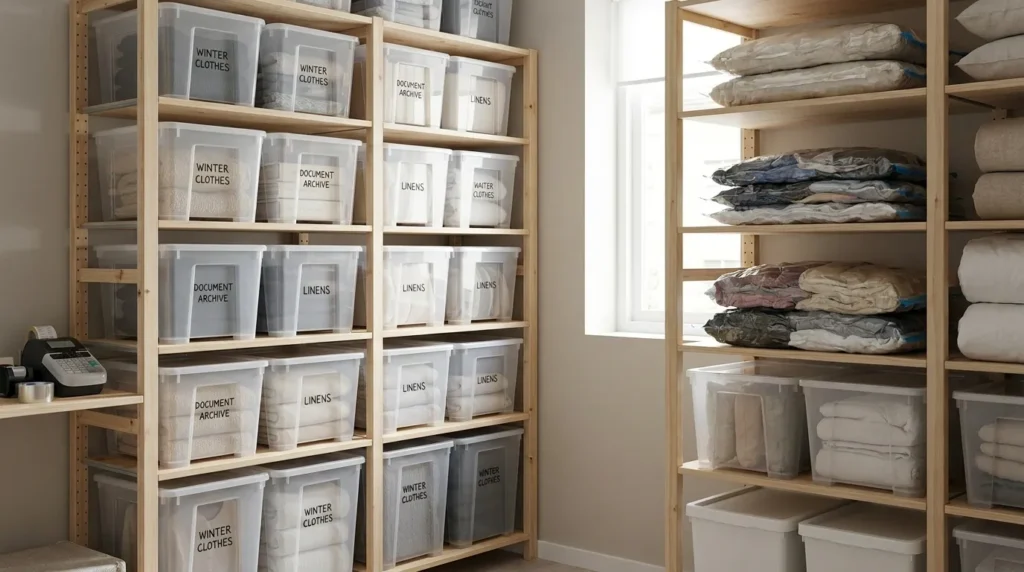
Clear bins: Use for items you access frequently or need to identify quickly — seasonal decor, sports gear, kids’ toys. You see what’s inside without opening.
Opaque bins: Better for items that are sensitive to light (certain fabrics, photos) or that won’t be accessed for months. If you use opaque, label with extreme specificity.
For tight spaces, budget-friendly storage containers covers the most durable stackable options across price points. And if you’re working with a particularly small home, hidden storage ideas for small homes shows how to use underutilized spaces — under stairs, behind doors, inside ottomans — without buying new furniture.
Vacuum Storage Bags for Bulky Items
Vacuum bags reduce the storage volume of comforters, winter coats, and thick blankets by 60–70%. They’re one of the highest-ROI storage investments available. Use them for anything bulky and infrequently accessed.
Off-Site Storage: When It’s Worth It
If your home genuinely can’t accommodate all seasonal items — especially if you have ski equipment, camping gear, kayaks, or oversized outdoor furniture — a storage unit earns its cost. Calculate before committing: if you’re paying $50–80/month for storage, you need to be accessing those items multiple times a year to justify it. Single-season items used once annually usually don’t clear that bar.
Keeping the System Going Year-Round
The 10-Minute Weekly Reset
Every Sunday evening (or whatever day works), spend 10 minutes on a single habit: return everything to its designated place. That’s it. No deep cleaning, no sorting. Just resetting. This one habit prevents the accumulation that turns seasonal transitions into full weekends of work.
To build this into a repeatable routine, the cleaning schedule generator tool helps you map out weekly and seasonal tasks into a realistic calendar you can actually stick to.
Photograph Your Setups Before You Pack
Before you dismantle any organized space — your fall mantel, your reorganized garage shelves, your closet layout — take a photo. Store it in a phone album labeled by season and year. Next time you’re setting up the same space, the photo replaces 30 minutes of figuring out what worked last time.
Build a Seasonal Notes Log
When you’re packing away seasonal items, write a short note and put it in the bin: “The fall garland was too long for the doorway — buy shorter next year” or “The summer curtains looked good but let in too much light.” Fold the note and lay it on top. Open the bin next season and the note is the first thing you see.
This tiny habit eliminates repeated mistakes and makes your seasonal system smarter every year.
Frequently Asked Questions
When is the best time to start seasonal organization? Start 2–3 weeks before the season actually changes. That gives you time to finish without rushing and to pick up any storage supplies you need before they sell out.
How many storage bins do I actually need? Most households manage 4 seasons of clothing rotation in 8–12 medium-to-large bins. Decor storage runs separately. Start with what you have, buy only when a specific need becomes clear.
What’s the two-year rule for clothes? If you haven’t worn a piece of clothing in two full years — meaning it went through storage and came back out without being used — donate it. It won’t be worn next year either.
How do I get the whole family involved? Assign zones, not tasks. “You’re responsible for your own closet rotation and your bathroom shelf” works better than “help me organize.” Everyone knows exactly what’s theirs to manage.
Do I need a professional organizer? For most people, no. A clear system and a few hours per season is enough. Professional organizers are genuinely useful if you’re setting up a system for the first time in a large home, or if you’re dealing with a significant downsizing or move.
For a broader approach to staying organized beyond just seasonal transitions, explore seasonal home organization strategies for year-round results — it covers the maintenance habits that keep the system running between your quarterly pushes.



Leave a Reply